Home | Recordings | Presentation Information | Organising Committee
Presentation Recordings
The ADCET UDL Symposium 2026, hosted by the University of Tasmania, brought together 160 delegates in person and 366 online for three days of sharing, connecting and co-designing more inclusive tertiary education. From Hobart to lounge rooms and offices across the country and beyond, the energy and generosity of this community was felt everywhere.
Presentation summaries, abstracts and presenter bios
The sessions below are sorted alphabetically by the presentation or workshop titles. Alternatively, enter the speaker's name in the search box and sort the results by Latest created to find their presentation.
Symposium Welcome, Keynote, CAST Session and Wrap-up
-
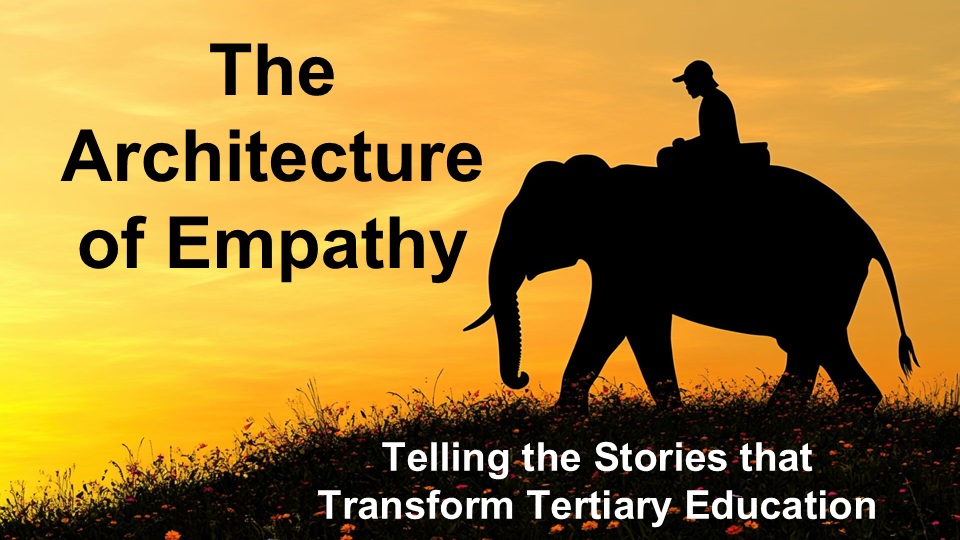
The Architecture of Empathy - Telling the Stories that Transform Tertiary Education
This keynote explored how empathy can move beyond sentiment and into structural, cultural, and relational change. It examined how empathy becomes visible through the stories we tell, the language we use, and the ways we invite others to understand experiences different from their own.
-
CAST - International UDL Open Research Hub
This session explored an International UDL Open Research Hub - an accessible, collaborative space to share research and advance global UDL practice and included a brief overview, participant discussion, and opportunities to contribute to the Hub’s development.
-
ADCET UDL 2026: Symposium Opening
The 2026 ADCET UDL Symposium, MC'd by Samantha Poulos, opened with a Welcome to Country by Niara Mansell, followed by a welcome to delegates from University of Tasmania's Deputy Vice-Chancellor Natalie Brown.
-
ADCET UDL 2026: Symposium Wrap Up
The symposium concluded with student representative Angie sharing key reflections from the student forum followed by thanks to participants and a call to continue advancing inclusive education through collaboration and shared practice.
Presentations (A-D)
-
A Programmatic Approach to Universal Design for Learning in Postgraduate Health Promotion
This presentation showcased how the team programmatically designed for learner variability with an innovative Canvas (LMS) template. The design of this template for all courses meant UDL and optimised learning was embedded in the initial design and learning barriers were proactively removed.
-
A Universal Design for Learning Initiative for first year Humanities Students
Data analysis revealed accessibility gaps and high fail/withdrawal rates for students with disability and low-SES backgrounds, prompting UDL 3.0 embedding across nine first-year Humanities units.
-
Art-Based Learning - A Creative Approach to Teaching Theory
The OT Models 'Art Series' transformed text-based teaching of theoretical models into a creative, hands-on learning experience, using art-based activities aligned with UDL 3.0 to aid understanding.
-
Benefits and Cautions when Embedding Universal Design for Learning into RTO Practice
This session examined trade-offs in embedding UDL within regulated RTO environments, identifying where it strengthened completion and evidence quality and where poor flexibility reduced compliance.
-
Beyond Accessibility - Neurodivergent Students’ Experiences of Universal Design for Learning in Higher Education
This presentation examined UDL's impact on neurodivergent students' experiences and found it fostered inclusion and improved outcomes, but required consistent application and institutional support.
-
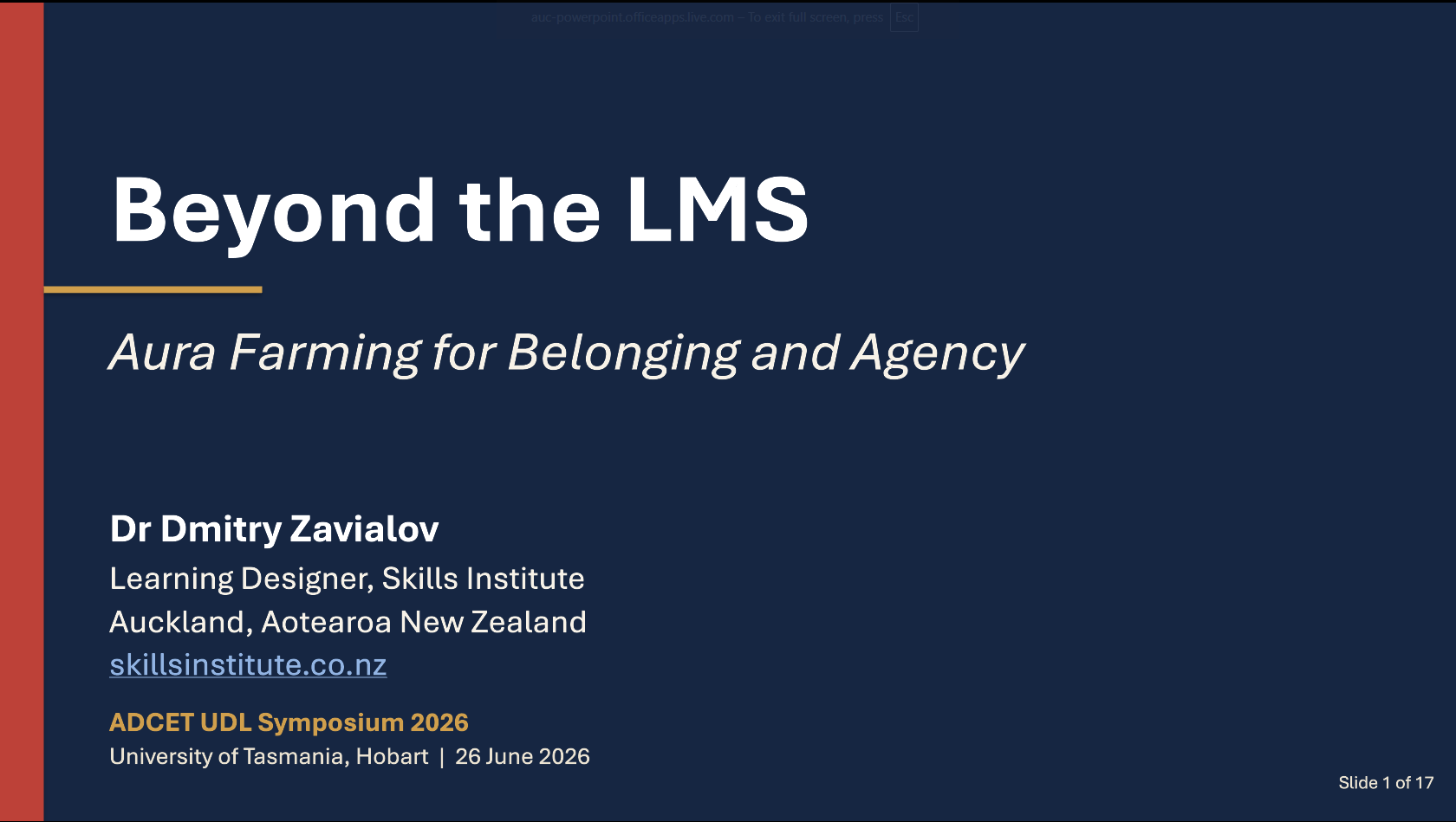
Beyond the LMS - Aura Farming for Belonging and Agency
Drawing on Aristotle, Habermas and heutagogy, this presentation argued learning design should intentionally design peer connection, offering a blueprint for belonging and agency implemented at Skills Institute.
-
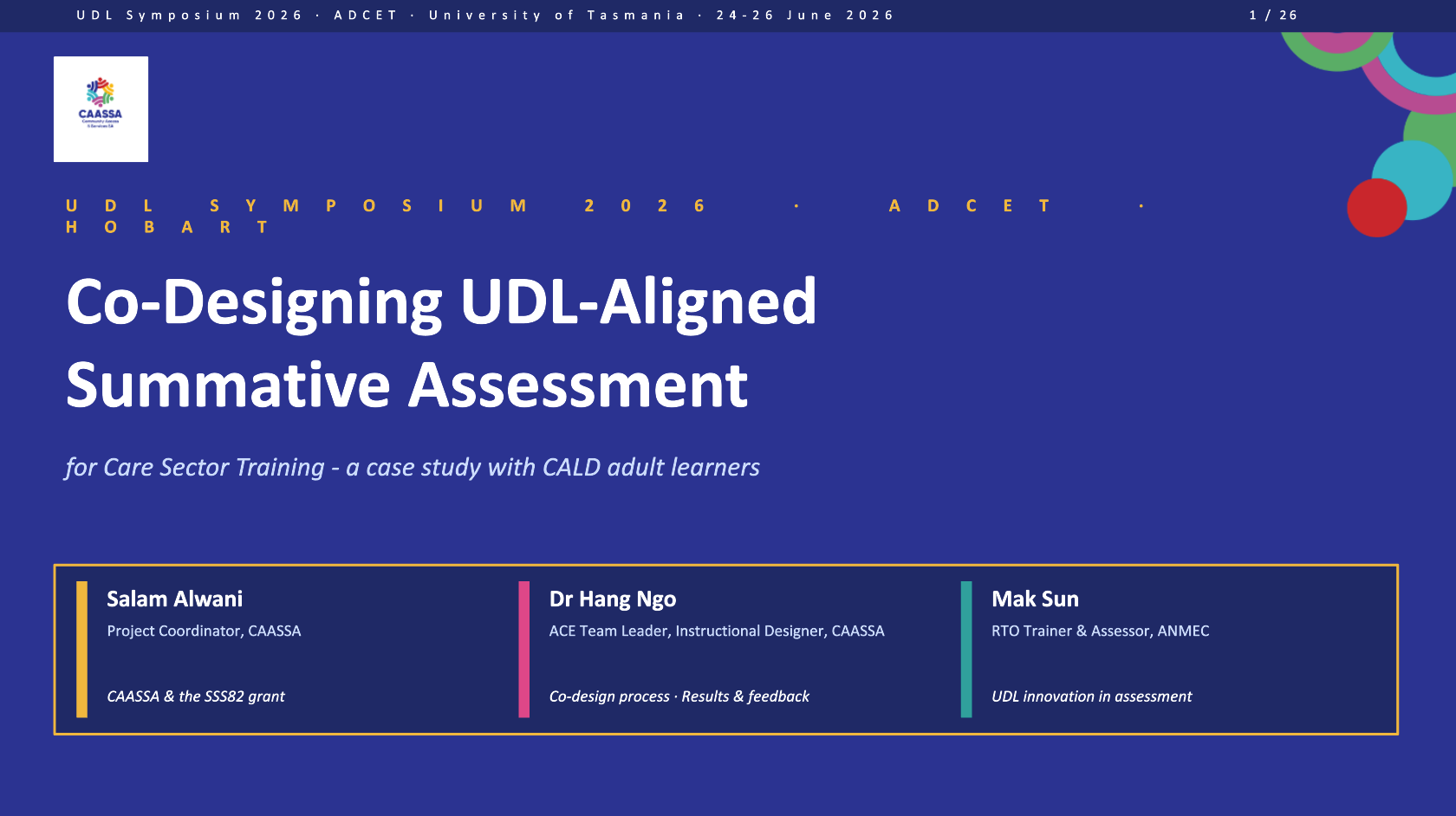
Co‑Designing UDL‑Aligned Summative Assessment for Care Sector Training - A Case Study with CALD Adult Learners
This presentation shared findings from a co-design survey of 46 Vietnamese-Australian community members and care workers, making the case for redesigning care assessment using UDL 3.0 and AI-assisted design.
-
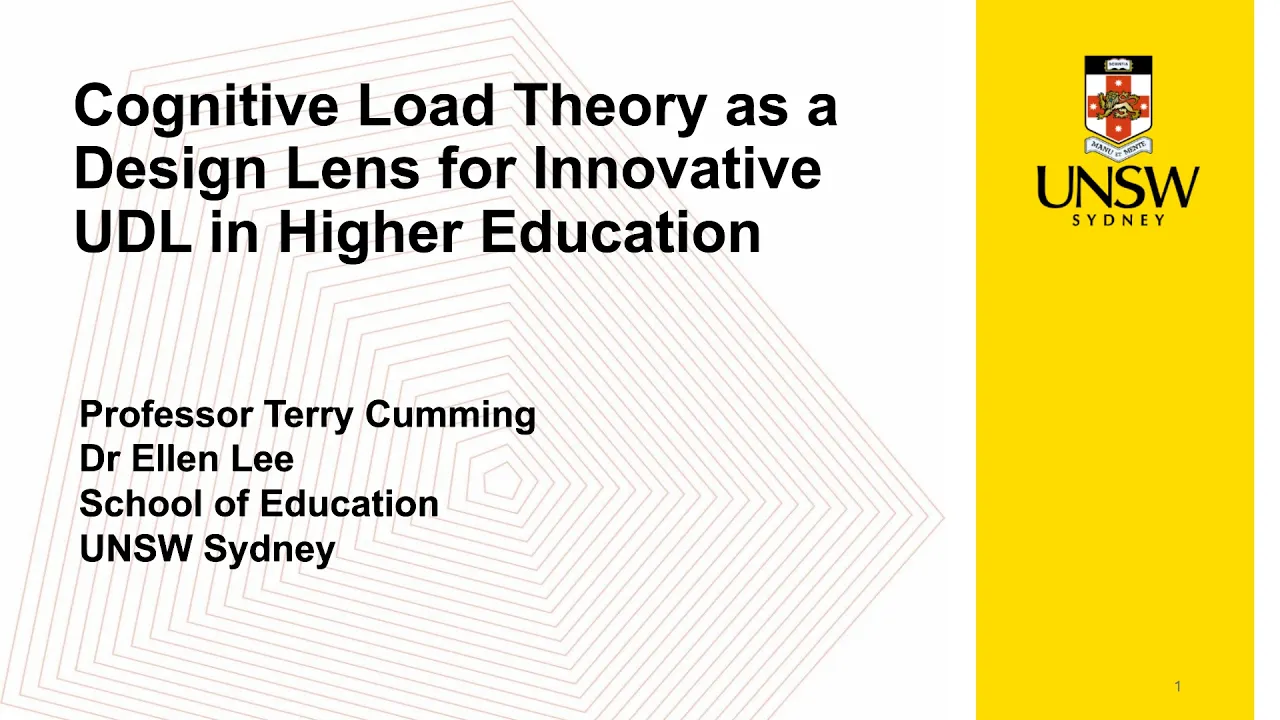
Cognitive Load Theory as a Design Lens for Innovative UDL in Higher Education
This session explored how Cognitive Load Theory theoretically underpinned UDL, aligning cognitive science evidence with UDL 3.0 to help participants design inclusive courses with reduced cognitive load.
-
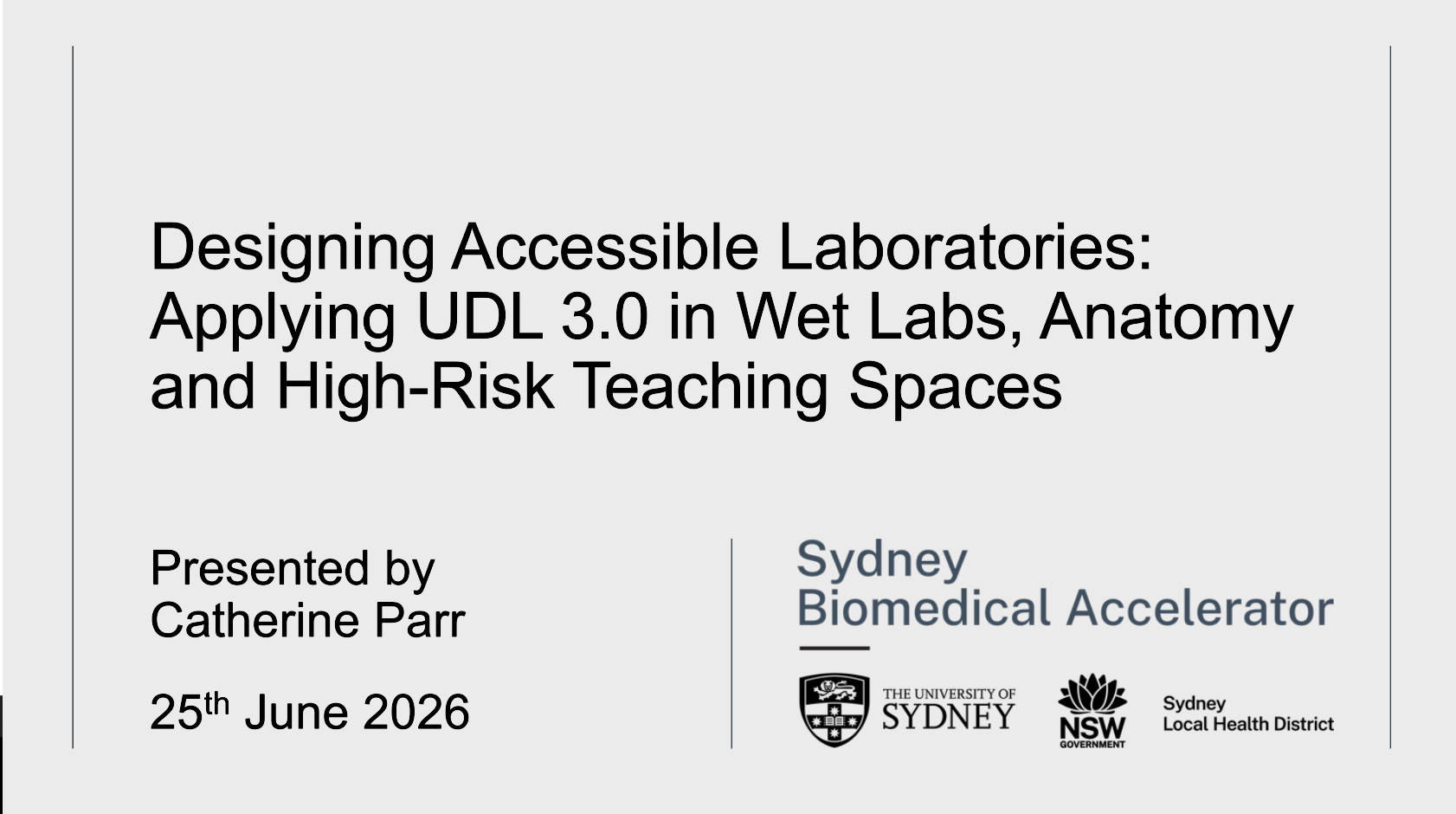
Designing Accessible Laboratories - Applying UDL 3.0 in Wet Labs, Anatomy and High-Risk Teaching Spaces
This session applied UDL 3.0 beyond the classroom via a student-informed accessibility review of wet labs and anatomy spaces, sharing co-designed recommendations for inclusive high-risk STEM settings.
-
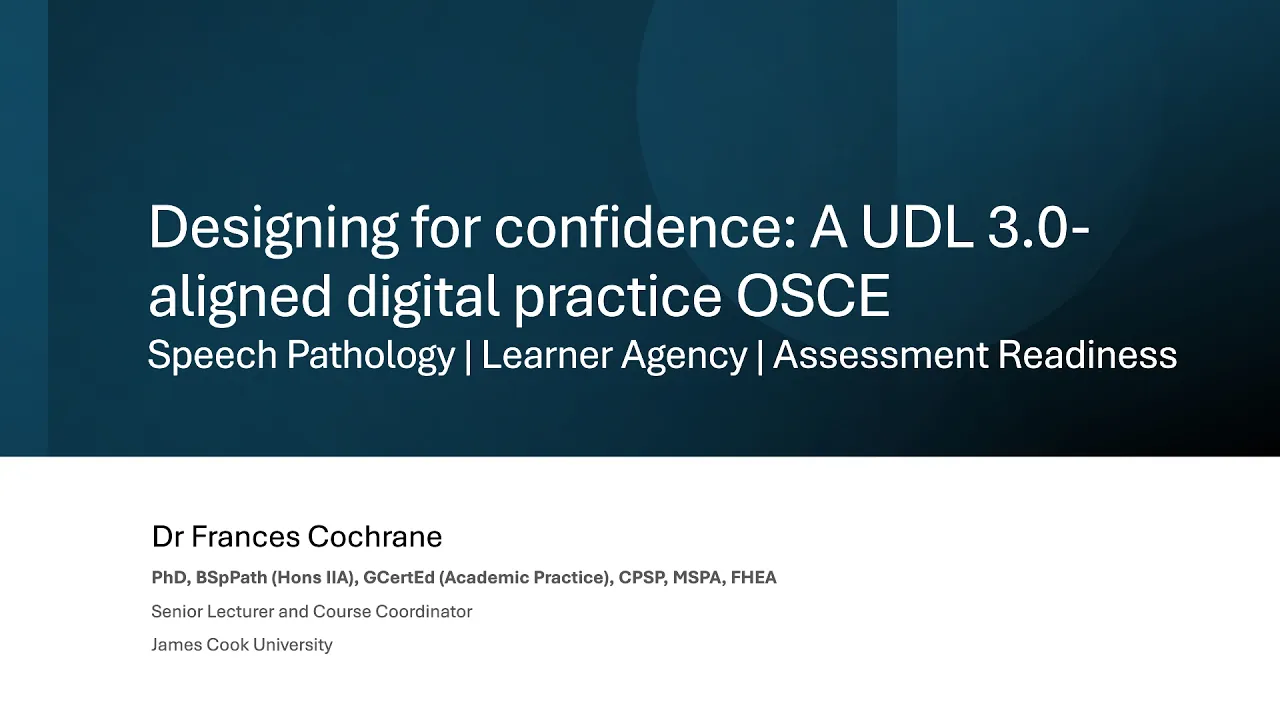
Designing for Confidence - A UDL–Aligned Digital Practice OSCE for Speech Pathology to Support Learner Agency and Assessment Readiness
This presentation outlined a UDL-aligned digital practice OSCE for speech pathology students, built using ADDIE, which reduced anxiety and enhanced confidence, agency and assessment literacy.
-
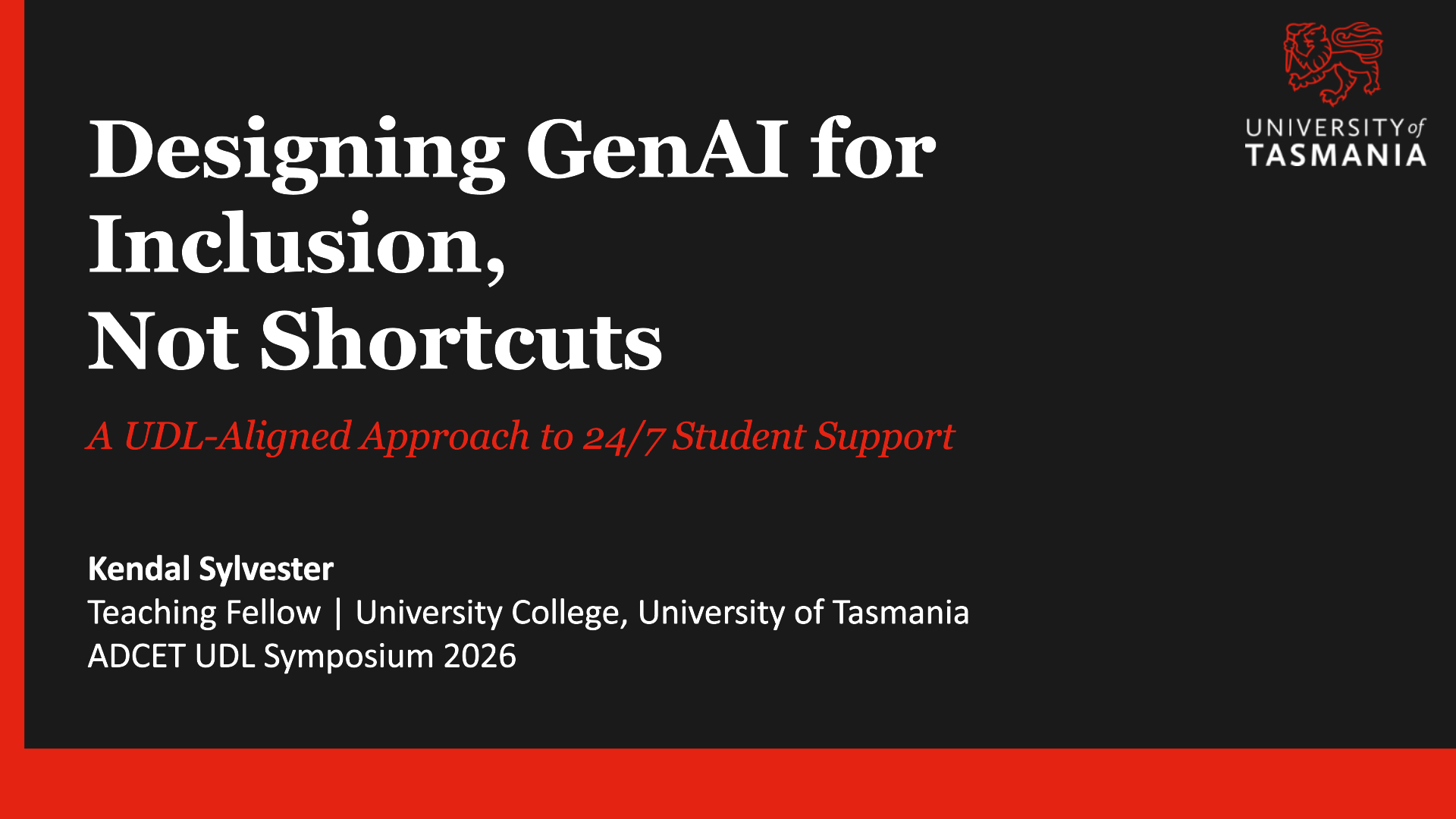
Designing GenAI for Inclusion, Not Shortcuts - A UDL-Aligned Approach to 24/7 Student Support
This presentation shared an early-stage example of a generative AI, UDL-aligned student support tool, exploring ethical design and how 24/7 AI support reduced barriers across HE and VET.
-
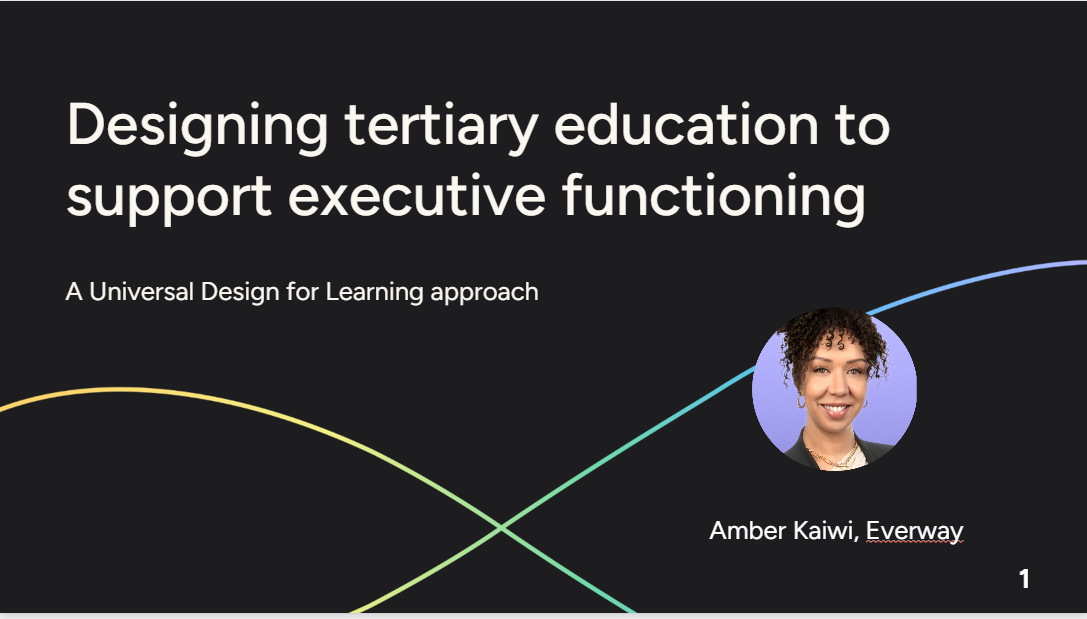
Designing Tertiary Education to Support Executive Functioning - A Universal Design for Learning Approach
This session revealed hidden executive functioning demands in tertiary and vocational settings and showed how UDL supported working memory, task initiation and organisation to reduce overload.
Presentations (E-M)
-
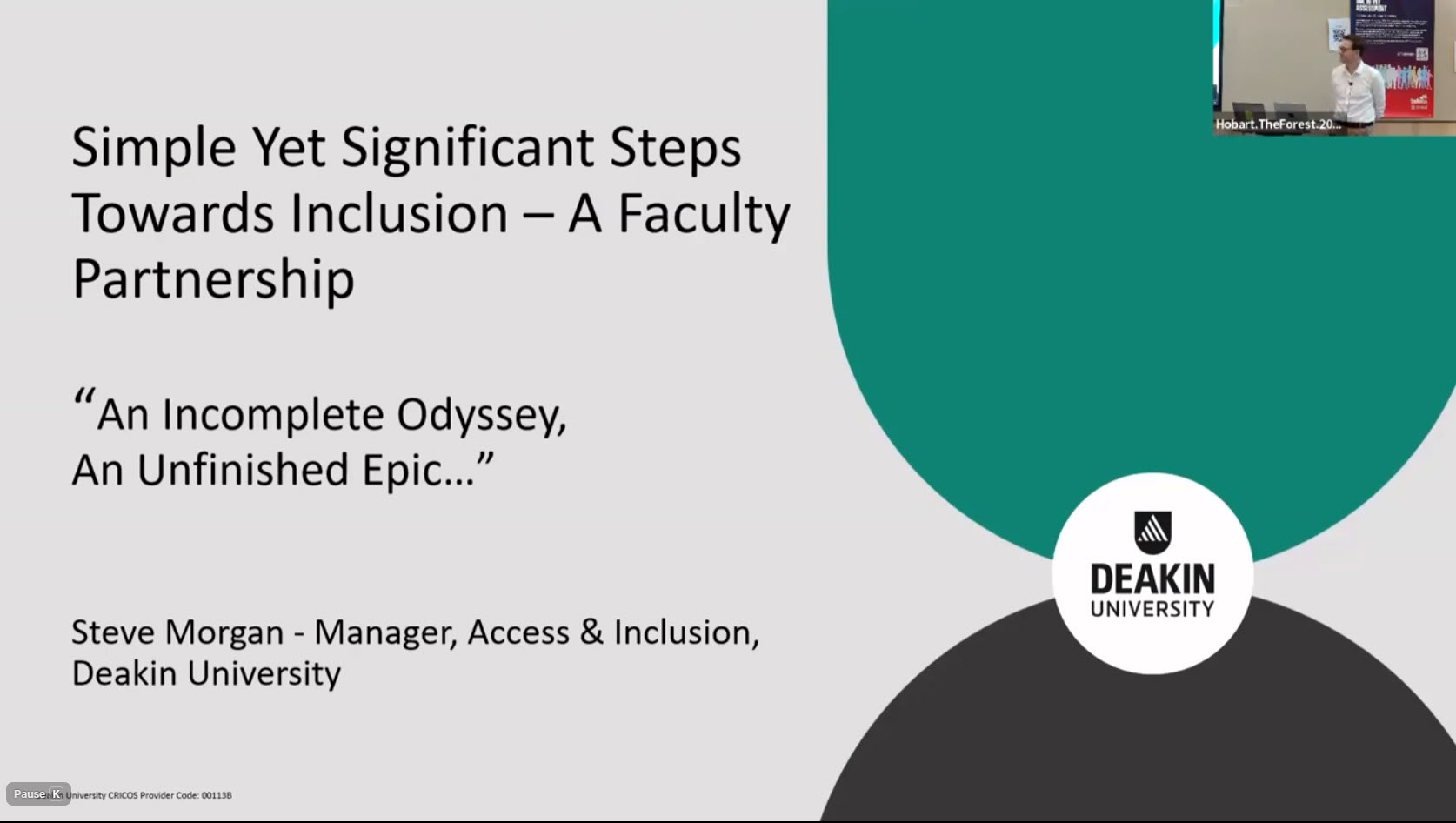
Embedding a Faculty Partner Model to Advance UDL at Deakin University – A Pilot
Deakin University embedded a Senior Coordinator from Access and Inclusion within its Faculty of Health as a Faculty Partner Pilot, building confidence and accelerating institution-wide adoption of UDL 3.0.
-
Embedding UDL 3.0 in Institution-wide Academic Support Resource Design
Learning Advisers at Southern Cross University embedded UDL 3.0 into institution-wide digital academic support, positioning accessibility, learner agency and autonomy as foundational design principles.
-
Exploring the Third Space - Facilitating learner engagement in Higher Education across Academic/Professional Binaries
This paper used two case studies of academic consultations and degree support to explore how student-facing professional staff facilitated engagement, arguing UDL required collaboration across roles.
-
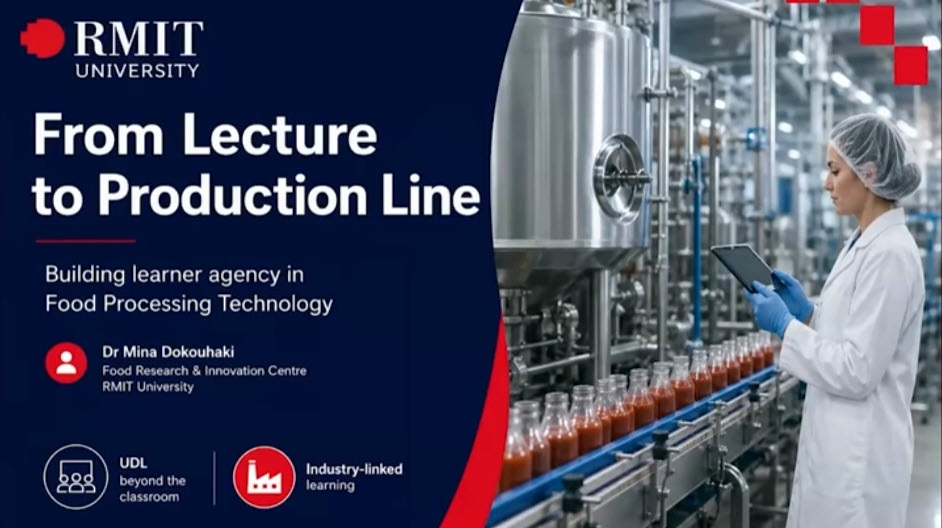
From Lecture to the Production Line - Building Learner Agency in Food Processing Technology
An HE Food Processing Technology course was redesigned using UDL 3.0, bridging the theory-to-industry gap through case studies, pilot-plant practicals, guest speakers and site visits.
-
From One Slide Deck to Five Access Points - Designing With Gen AI for UDL
This session demonstrated how Generative AI transformed a single PowerPoint into multiple accessible UDL 3.0-aligned formats, offering a replicable workflow that supported executive functioning.
-
Improving Supervision for Neurodivergent Graduate Researchers – A UDL and Participatory-Research Approach to the HDR Contex
Drawing on surveys and focus groups, this presentation shared how UDL and participatory research guided co-design of an institution-wide neurodiversity-affirming training package for graduate researchers.
-
Inclusion from the Ground Up - Using Equity Impact Assessment to Embed UDL in the Hume Tech School
Using Hume Tech School as a case study, this presentation showed how Equity Impact Assessments were used as an early design tool to embed UDL from the outset in new VET programs.
-
'Inclusive by Design’ - Institution-wide Implementation of UDL at RMIT
RMIT presented its institution-wide approach to embedding UDL, building cross-functional partnerships and co-designing with staff and students, strengthening leadership, capability and operations.
-
Inclusive Learning in a Virtual Gallery Space
This project developed a virtual gallery using UDL principles and assistive technology, fostering inclusive participation through persona-based presentations and interactive lectures for diverse learners.
-
Intentional Redesign of an Undergraduate Chemistry Laboratory Program
A university undergraduate chemistry laboratory program redesigned its assessments and LMS site with reference to UDL Guidelines 3.0, enhancing engagement and supporting executive functioning.
-
Levelling the Playing Field - Co-Designing Inclusive Sport and Wellbeing Through Student-Led UDL Practice
Students and staff at RMIT Vietnam co-designed an accessibility audit of sports and recreation facilities and shared strategies for embedding learner agency and inclusion beyond the classroom.
-
Making Practical Learning Visible - Using Observodon as a UDL-Aligned Tool for Video-Based Assessment and Feedback
This presentation introduced Observodon, a UDL-aligned video-based assessment and feedback tool that used video evidence and time-stamped feedback to reduce barriers in practice-based learning.
-
Making the Visual Accessible - Fashion, Art and Beyond
RMIT Fashion and Textiles ran co-designed workshops with access partners to develop written and audio description skills for students with low vision or blindness, building multisensory UDL practices.
-
Measuring Impact - A UDL Aligned Inclusive Assessment Self Evaluation Tool for Evidence Informed Best Practice
RMIT CoBL developed a browser-based self-evaluation tool that helped educators review and redesign assessment inclusively, co-designed with learning designers to scope proactive assessment design.
Presentations (N-Z)
-
Podagogy - Podcast Production Principles that Maximise Accessibility in Higher Education
This presentation shared research findings on which podcast design features most enhanced accessibility and engagement for a varied student cohort, as audio resources became more embedded in higher education.
-
Redesign with UDL in Mind - A Collaborative Pilot with Murdoch’s School of Nursing
This presentation shared research findings on which podcast design features most enhanced accessibility and engagement for a varied student cohort, as audio resources became more embedded in higher education.
-
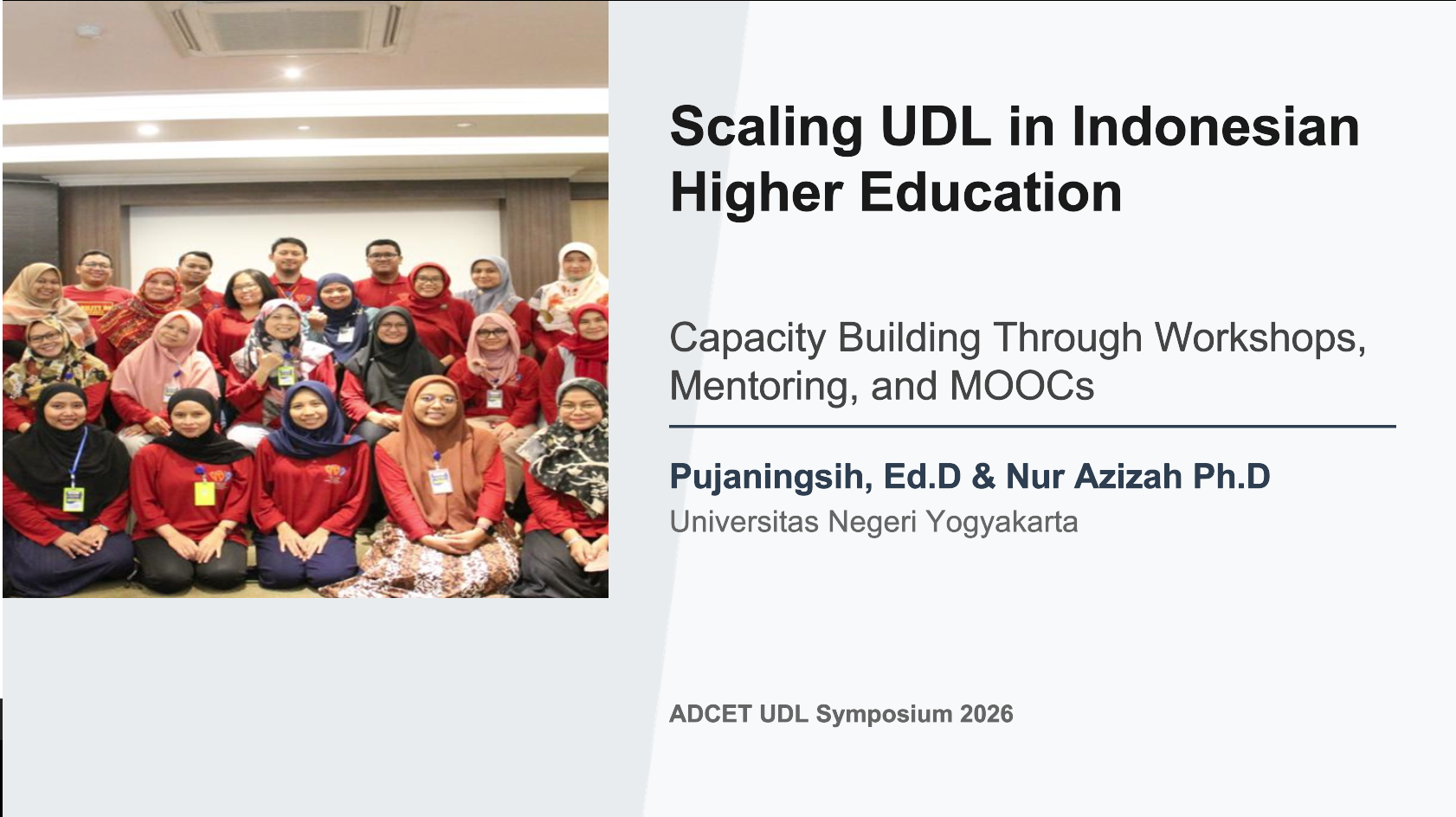
Scaling Universal Design for Learning in Indonesian Higher Education - Capacity Building Through Workshops, Mentoring, and MOOCs
A multi-university initiative in Indonesia built lecturers' capacity to implement UDL through workshops, mentoring and MOOCs, scaling inclusive teaching and improving access for students with disability.
-
Supporting students navigate the transition to university and become Self-regulated learners
A first-year Occupational Therapy unit redesigned four assessments using metacognitive scaffolding, UDL and AI, turning assessment into a structured developmental journey that built student agency.
-
The Importance of Universal Design for Learning for Part-time Students
This presentation gave an overview of a national survey of part-time students rating 11 UDL-based unit design elements, finding automatic extensions were most important for students with disability.
-
Through Multiple Perspectives Interprofessional Collaboration for Enabling Inclusive Assessment Practices
This presentation used provocations and Mentimeter questions to facilitate exploration of inclusive assessments, drawing on presenters' interprofessional collaboration on institution-wide workshops.
-
UDL - Practical Strategies for the University CFL Classroom
A Chinese as a Foreign Language course was redesigned using UDL 3.0, multimodal tools, learner choice and immersive roleplay, reducing barriers and building confidence and oral proficiency.
-
UDL Aligned, ASQA Compliant VET Assessment Practice
A VET-led Community of Practice explored and co-designed resources to build educator capability in UDL-aligned assessment that remained compliant with Australian Skills Quality Authority requirements.
-
UDL Beyond the Course - Designing Program Structures for Access and Inclusion
This presentation introduced a program-level UDL 3.0 lens used in a university-wide curriculum transformation to examine assessment patterns and cognitive load, offering a template for systemic change.
-
UDL Driven Design for Remote Adult Learners in the VET Sector
TAFE SA redesigned SEE Distance Learning resources using UDL practices, mobile-friendly multimodal supports and AI-assisted design, improving clarity, engagement and accessibility for remote VET learners.
-
Universal Design for Learning in Initial Teacher Education - Do we practice what we preach?
This project investigated whether initial teacher educators implemented UDL in practice and found a gap between theory and application, with systemic barriers and traditional approaches limiting its use.
-
Unlocking the Equity Potential of AI through Open Education
This presentation used scenarios to demonstrate how students used generative AI for access and equity, how copyright limited this, and how open educational resources resolved these issues.
Workshops
-
Beyond Commitments - Leveraging Cultural Capital and Positionality in Learning Design through UDL 3.0
This workshop examined how UDL 3.0 moved inclusion beyond access to foreground identity, belonging and bias, having participants co-design identity-affirming, equity-driven practices for HE and VET.
-
Designing for Joy - Inclusive Engagement in Asynchronous Learning
This workshop applied a practical framework to redesign common LMS elements, helping participants foster belonging, confidence and motivation for diverse adult learners in asynchronous environments.
-
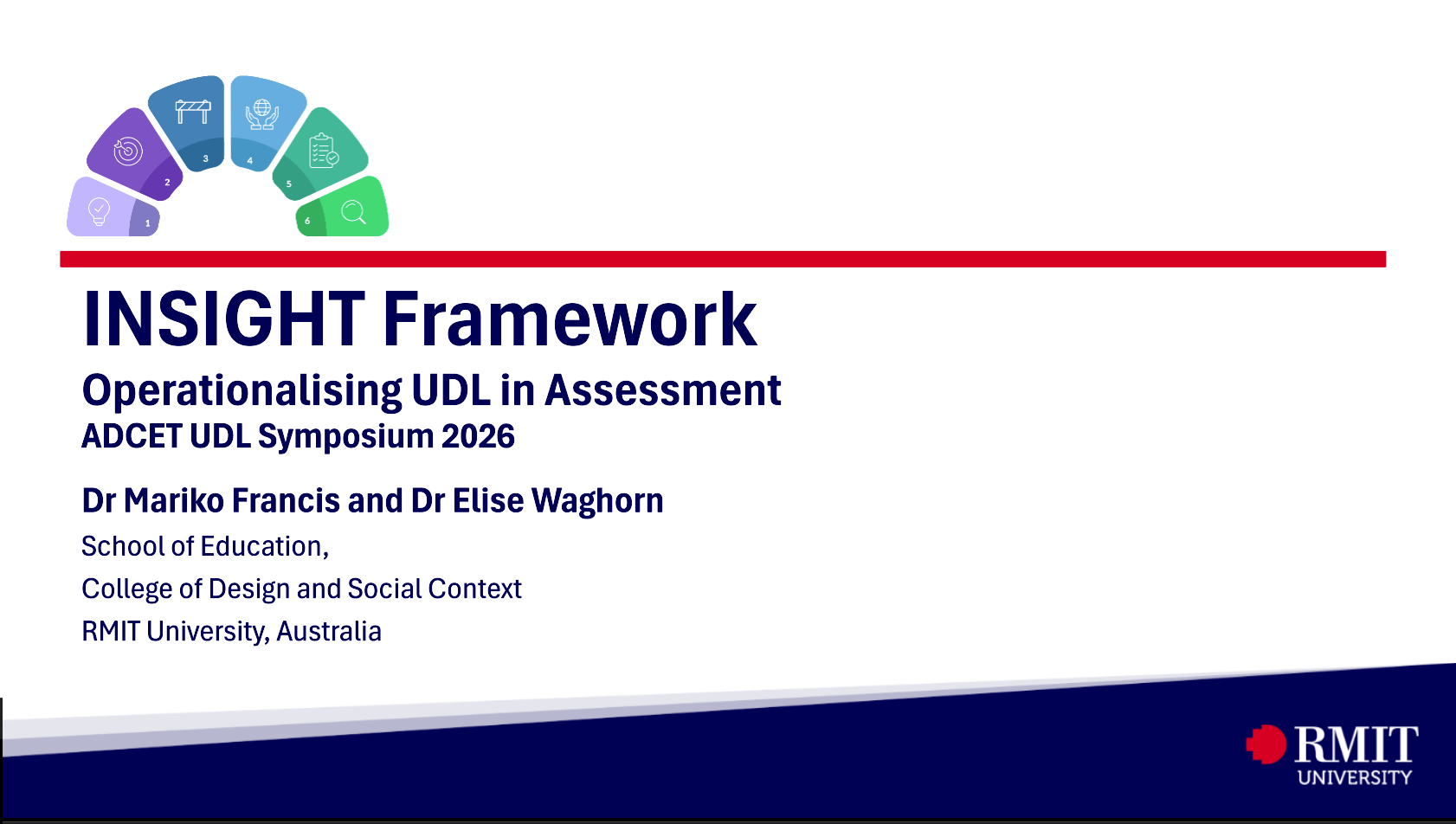
INSIGHT - Operationalising UDL in Assessment
This workshop demonstrated how the INSIGHT Framework operationalised UDL principles in assessment design, having participants analyse and redesign a task using structured barrier anticipation.
-
Supporting the Whole Student - Using Trauma Responsive Practice and UDL in Higher Education Student Success
This practical workshop invited participants to explore and apply a trauma-responsive framework alongside UDL techniques to support student success in higher education.
-
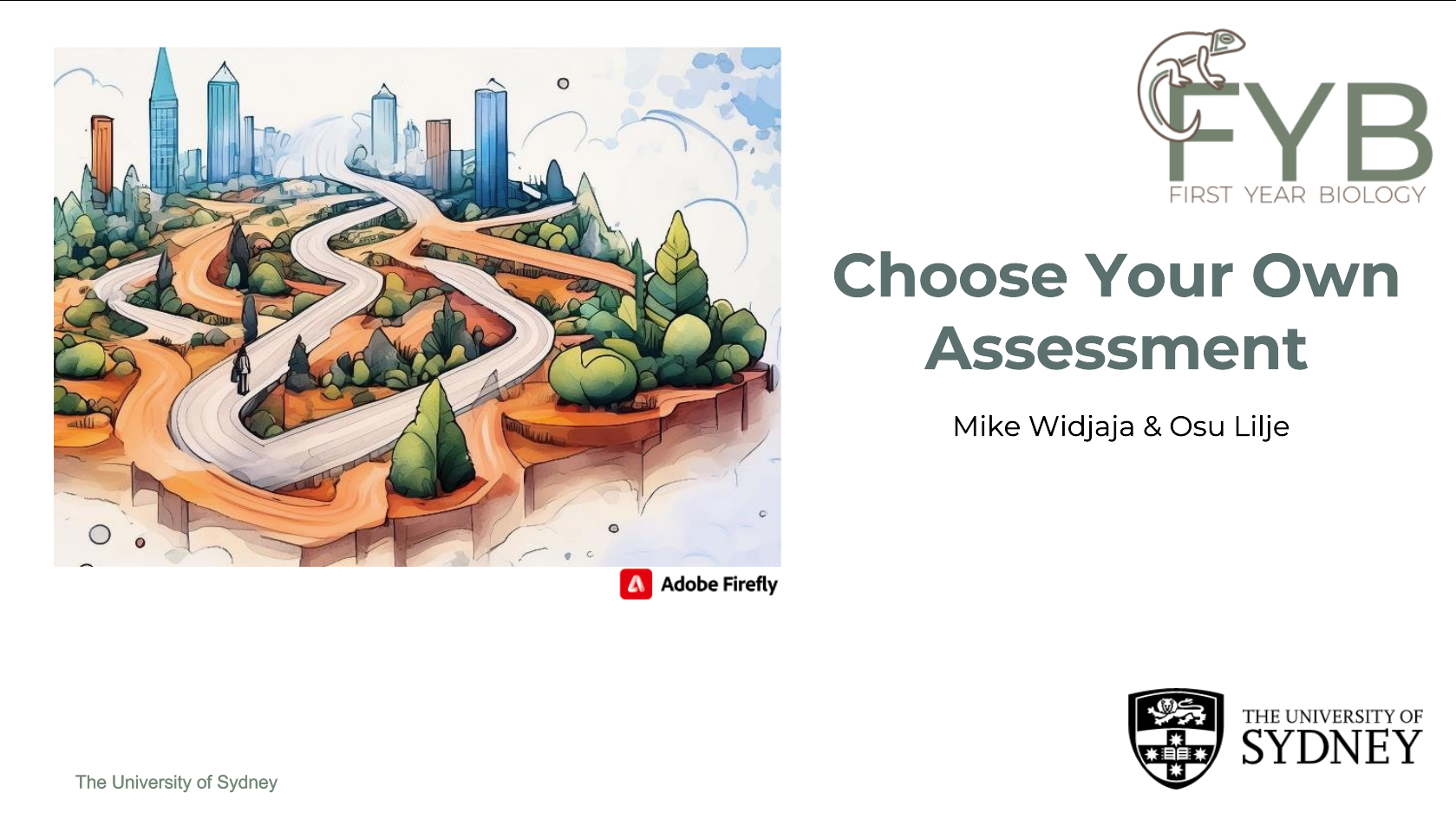
The 'Choose Your Own Assessment' - Applying UDL to Assessment Choice in First-Year Biology
This presentation let participants choose its format while examining a UDL-informed 'Choose Your Own Assessment' model implemented at scale in first-year biology to enhance engagement and agency.
-
UDL in Action - Rethinking 'Representation'
This research-informed workshop foregrounded cognitive accessibility as vital pedagogical practice, sharing accessible design strategies to equip undergraduate and early career teachers as inclusive educators.
Gallery Presentations
-
Art-Based Learning - A Creative Approach to Teaching Theory
The OT Models 'Art Series' transformed text-based teaching of theoretical models into a creative, hands-on learning experience, using art-based activities aligned with UDL 3.0 to aid understanding. (Short video)
-
Designing Academic Integrity for All - A UDL Journey in Building an Inclusive Academic Integrity Module
In this gallery presentation, the UDL-guided redesign of a compulsory academic integrity module was showcased. Through accessible design, authentic scenarios, and interactive learning, the project demonstrated how UDL can reduce barriers and support diverse student engagement.
-
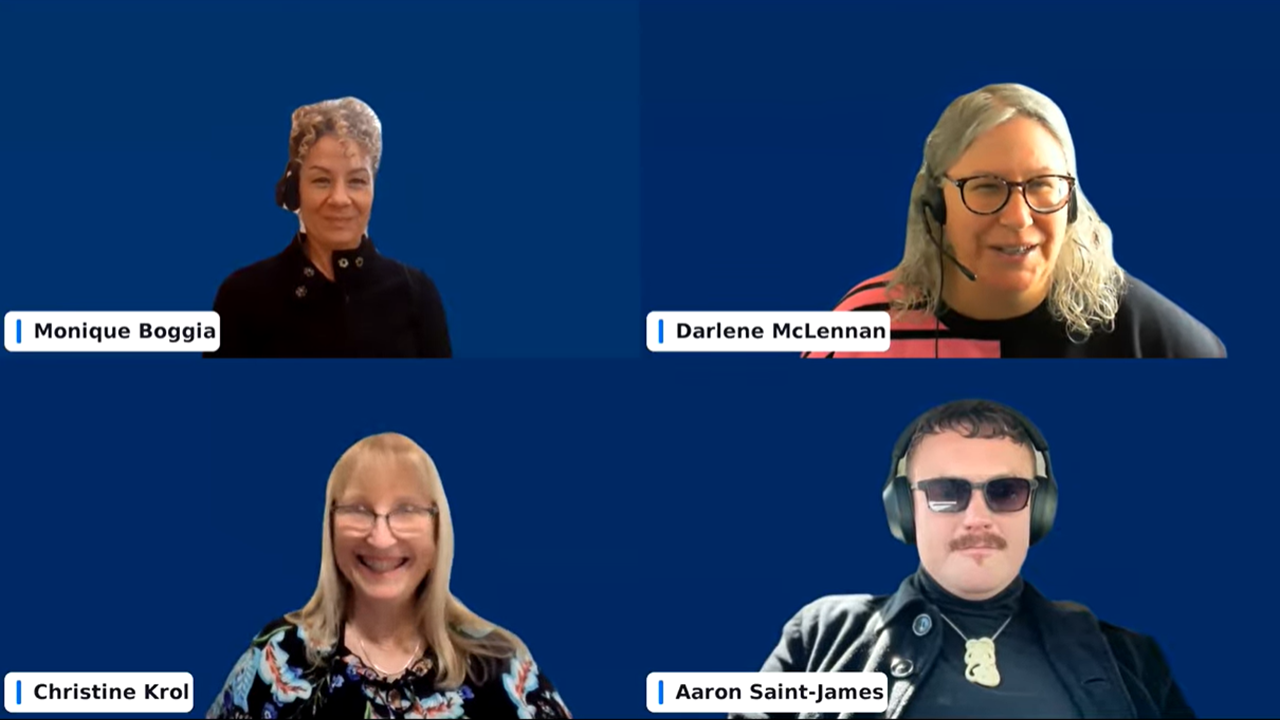
Show Me Your Poster - UDL Symposium Gallery Showcase
In this special online event showcasing their UDL Symposium Gallery Posters, Dr Christine Krol, Monique Boggia, and Aaron Saint-James shared research, practical strategies, and lived experience demonstrating how co-design and UDL can enhance engagement, accessibility, and inclusion.
Our Valued Symposium Sponsors

The UDL Symposium 2026 is brought to you by ADCET
In partnership with


ADCET is funded by the Australian Government Department of Education