Good Practice Case Studies
We have collated a range of good practice case studies from VET providers across Australia, each showing how they are supporting students with disability in ways that connect to the revised Standards for RTOs. They vary in scale and focus, some describe a whole-of-organisation change, others a single practical idea that made a difference in one classroom. We showcase which of the standards each case study aligns with. Our thanks to the staff and students who shared their stories with us, and to the Australian Government Department of Employment and Workplace Relations for supporting this work. These case studies were developed in 2026.
-
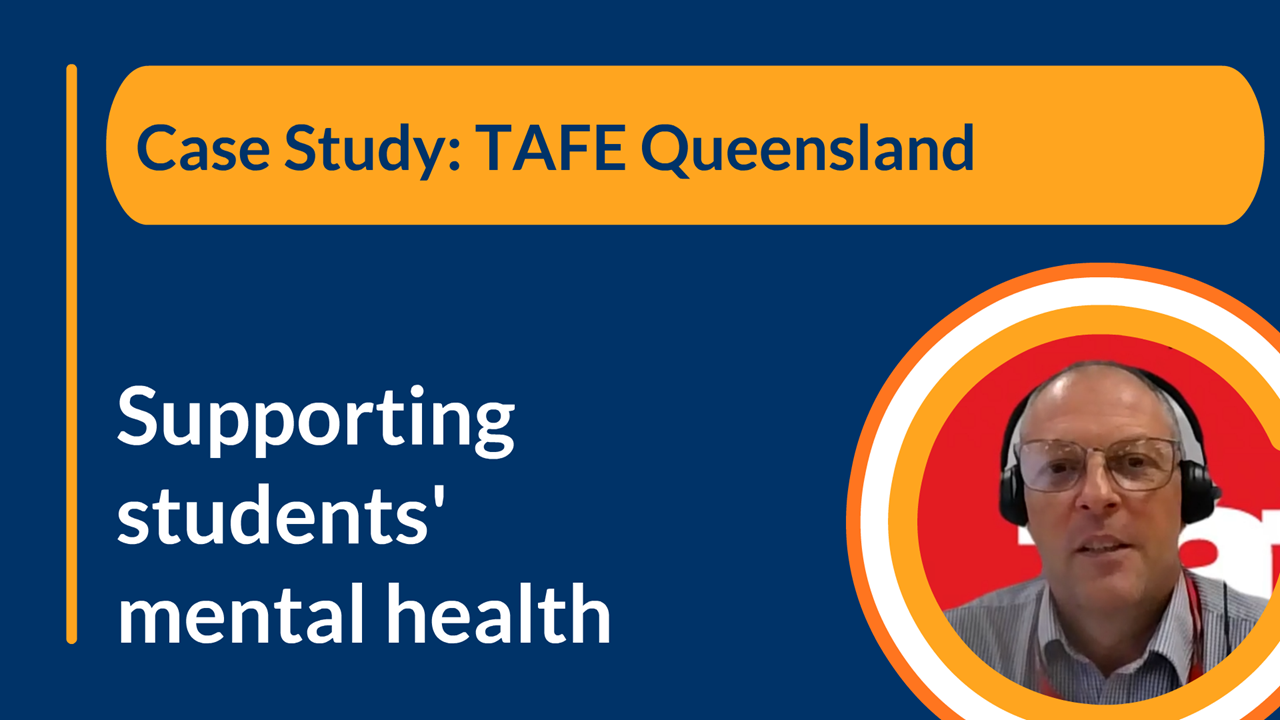
Supporting students' mental health
TAFE Queensland supports student wellbeing and success by training staff in Mental Health First Aid.
Relating to RTO Standards
2.3 Training support
2.5 Diversity and inclusion
2.6 Wellbeing
3.1 VET workforce management
4.4 Continuous improvement -
Tutorial support through DAAWS
TasTAFE uses DAAWS tutorial support to help a trainee with disability finish their qualification and stay in work.
Relating to RTO Standards
1.4 Principles of assessment
2.3 Training support
2.4 Disability and reasonable adjustment
2.5 Diversity and inclusion
4.4 Continuous improvement -
Using technology to support students
SuniTAFE gives every student access to academic support and digital tools that help them study independently.
Relating to RTO Standards
1.1 Training and assessment
2.1 Information
2.3 Training support
2.5 Diversity and inclusion
3.1 Workforce management
4.4 Continuous improvement -
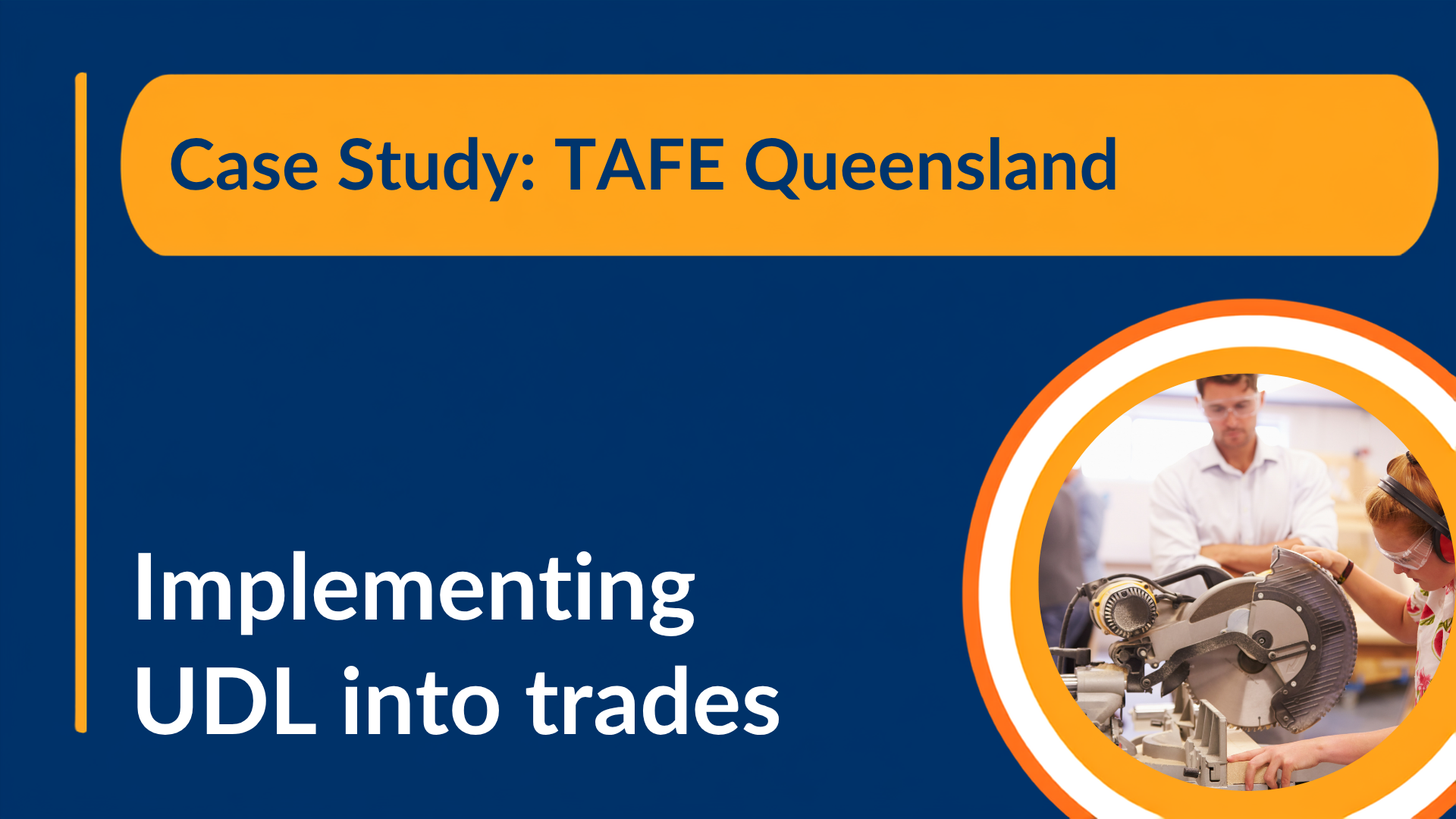
Implementing UDL into trades
TAFE Queensland uses Universal Design for Learning in a pre-vocational training course in trades
Relating to RTO Standards
1.1 Training and assessment
1.4 Principles of assessment
2.3 Training support
2.4 Disability and reasonable adjustments
2.5 Diversity and inclusion
2.6 Wellbeing
3.1 Workforce management
4.4 Continuous improvement -
Supporting student transitions to TAFE
TAFE Victoria employs Disability Transition Officers to support students with disability from school into study.
Relating to RTO Standards
2.1 Information
2.3 Training support
2.4 Disability and reasonable adjustments
2.5 Diversity and inclusion
4.1 Leadership and accountability
4.4 Continuous improvement -
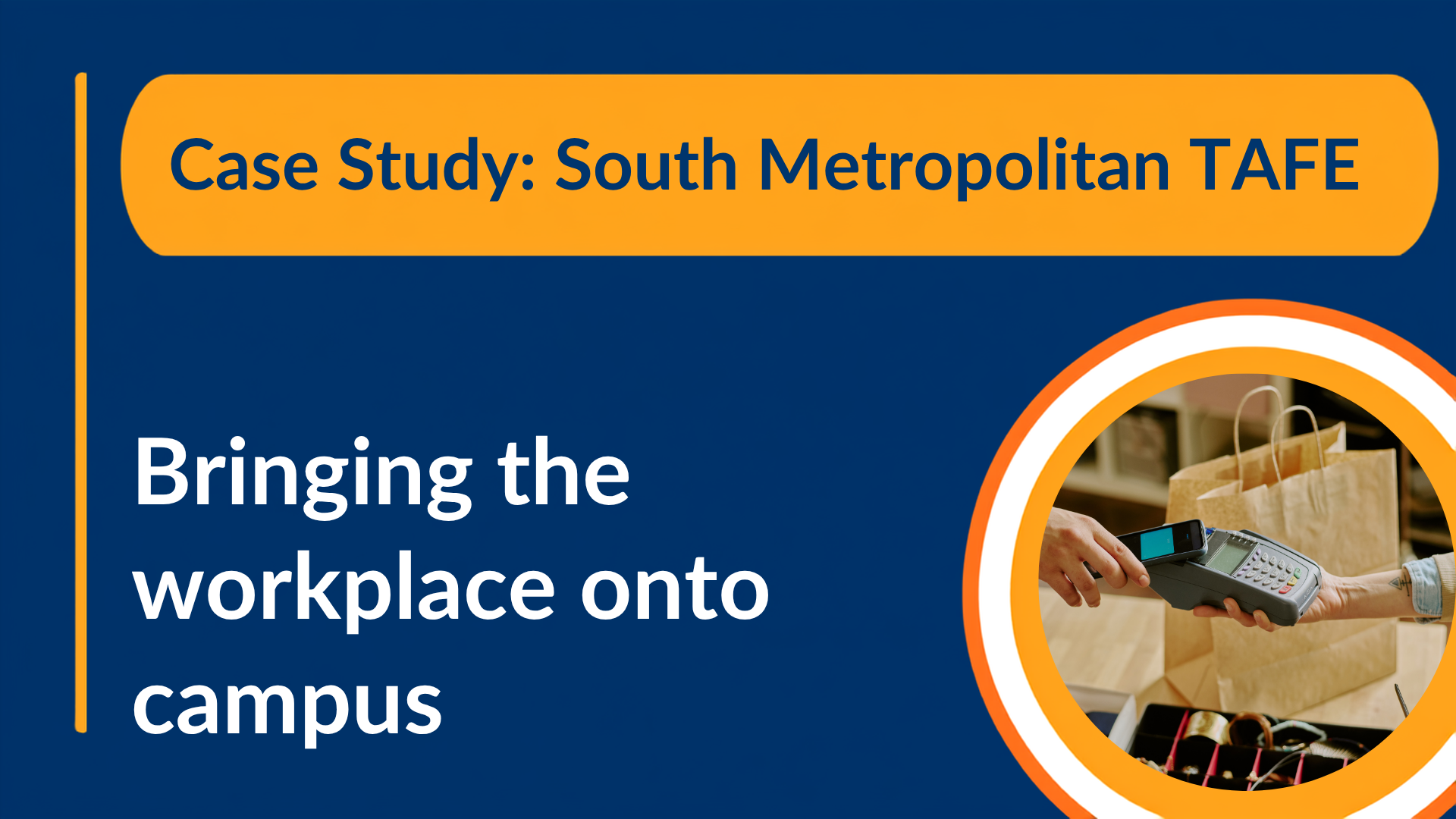
Bringing the workplace onto campus
South Metropolitan TAFE uses a simulated supermarket on campus to build students' retail and employability skills.
Relating to RTO Standards
1.1 Training and assessment
1.2 Industry engagement
1.8 Facilities, resources and equipment
2.1 Information
2.3 Training support
2.5 Diversity and inclusion -
Creating future UDL leaders
Skills SA built a twelve-week program to grow Universal Design for Learning capability among VET educators in South Australia.
Relating to RTO Standards
1.1 Training
2.3 Training support
2.5 Diversity and inclusion
3.1 Workforce management
4.1 Leadership and accountability
4.4 Continuous improvement -
Building staff capability in UDL
North Metropolitan TAFE runs a ten-week program that has trained more than one hundred lecturers in inclusive design.
Relating to RTO Standards
1.1 Training
2.3 Training support
2.5 Diversity and inclusion
3.1 Workforce management
4.4 Continuous improvement -
Neurodivergent peer mentoring and support
A North Metropolitan TAFE student talks about the peer mentoring and staff support behind their progression to Advanced Diploma.
Relating to RTO Standards
1.1 Training
2.3 Training support
2.4 Disability and reasonable adjustment
2.5 Diversity and inclusion
2.6 Wellbeing
4.4 Continuous improvement -
Creating inclusive pathways into education
TAFE NSW's Find Your Fit tool helps prospective students reflect on their skills before enrolling, and flags support needs early
Relating to RTO Standards
1.1 Training
2.1 Information
2.3 Training support
2.4 Disability and reasonable adjustment
2.5 Diversity and inclusion
4.4 Continuous improvement -
Developing an Easy Read DIAP
TAFE NSW produced an Easy Read version of its Disability Inclusion Action Plan so staff, students and community could all engage with it
Relating to RTO Standards
2.1 Information
2.5 Diversity and inclusion
3.1 Workforce management
4.1 Leadership and accountability
4.4 Continuous improvement -
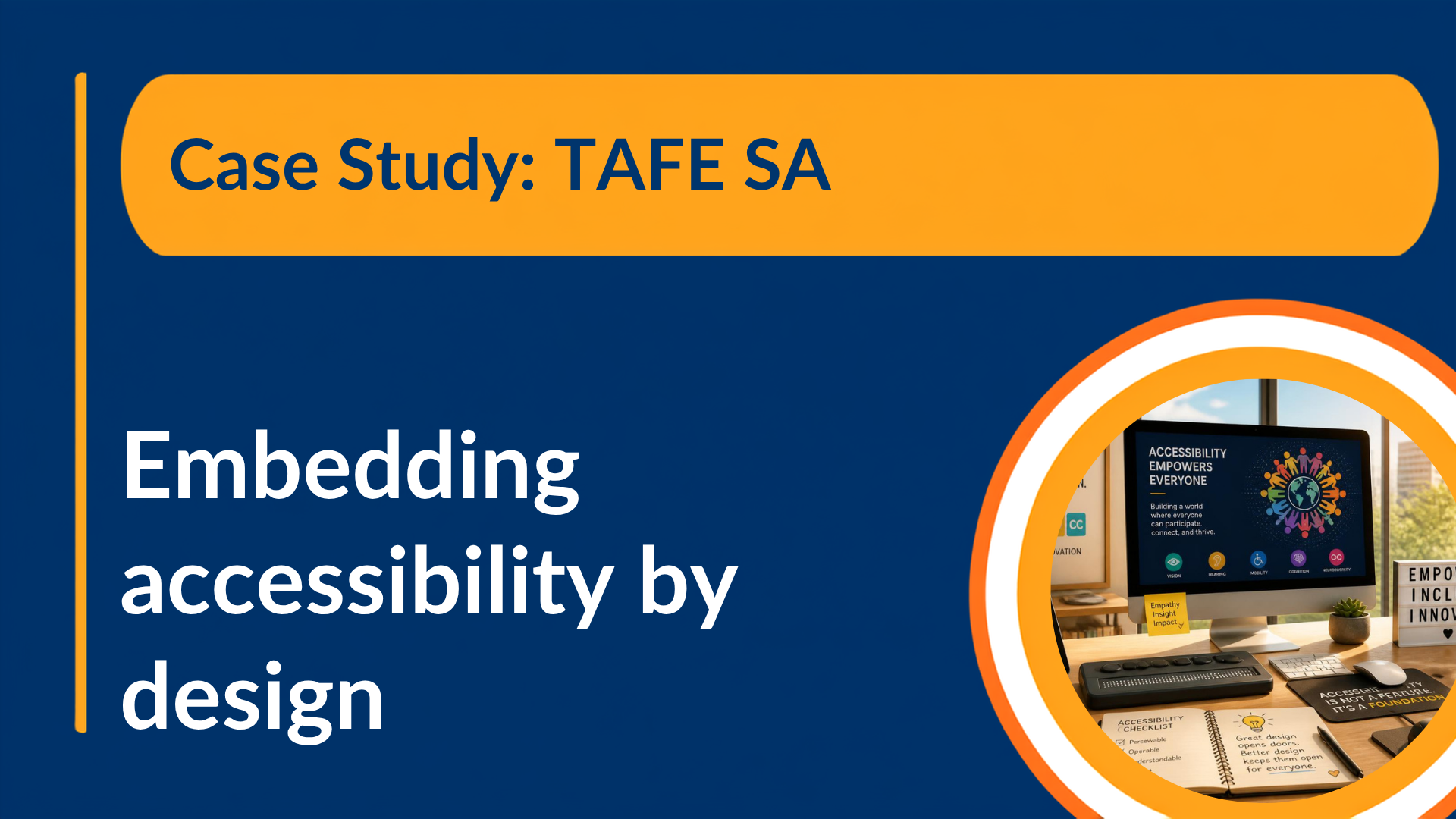
Embedding accessibility by design
TAFE SA's teaching and learning staff co-designed a toolkit of templates, guides and checklists to help educators design accessible learning from the start.
Relating to RTO Standards
1.1 Training
1.8 Facilities, resources and equipment
2.5 Diversity and inclusion
3.1 Workforce management
4.1 Leadership and accountability
4.4 Continuous improvement -
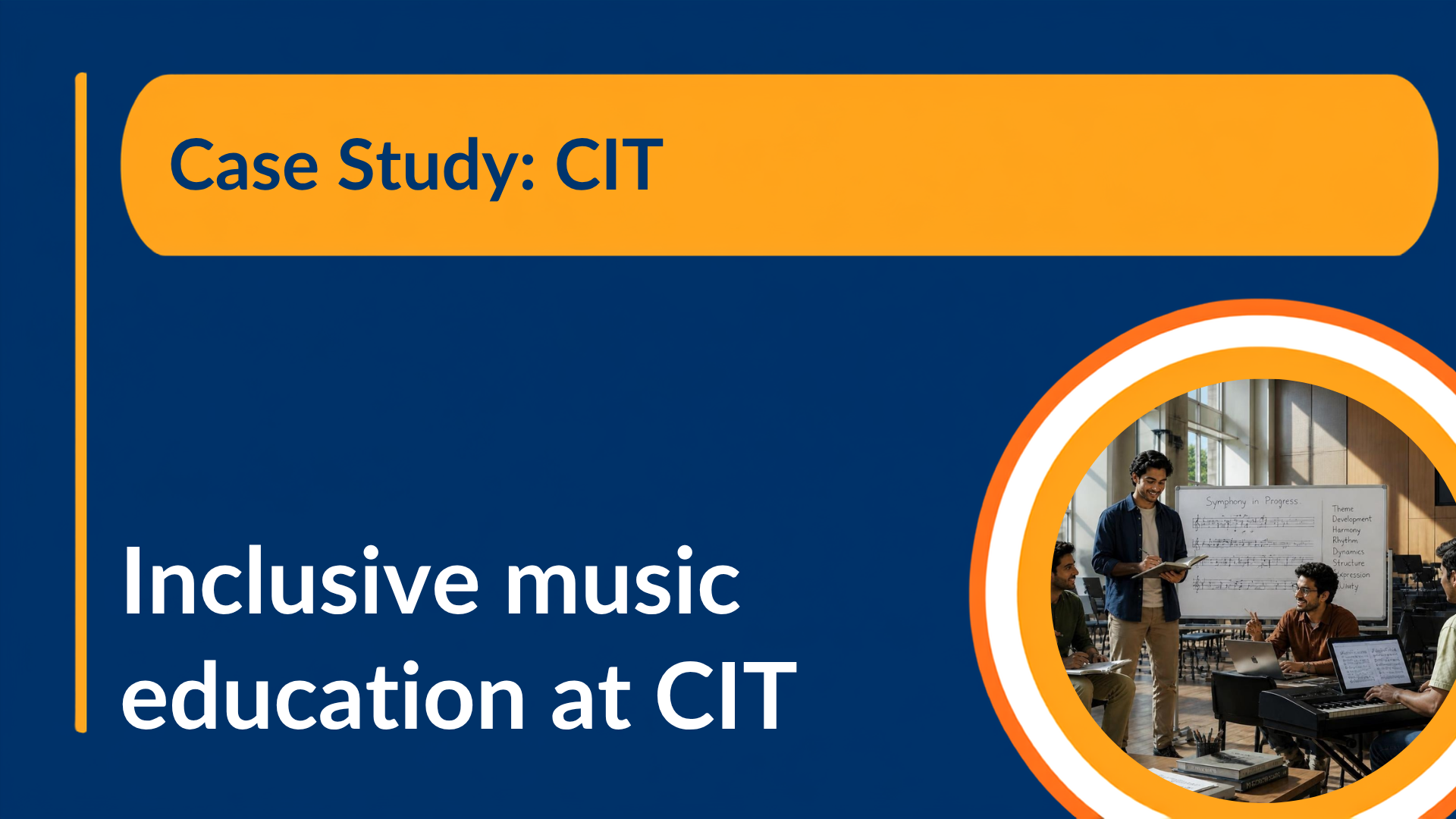
Inclusive music education at CIT
A Canberra Institute of Technology student who is blind and her teacher talk about the adjustments and classmate support.
Relating to RTO Standards
1.1 Training
1.4 Principles of assessment
2.1 Information
2.3 Training support
2.4 Disability and reasonable adjustment
2.5 Diversity and inclusion
4.4 Continuous improvement -
UDL strategies to support diverse learners
A South Metropolitan TAFE lecturer rebuilt her aquaculture course using UDL so students could engage in more than one way.
Relating to RTO Standards
1.1 Training
1.4 Principles of assessment
2.3 Training support
2.5 Diversity and inclusion
3.1 Workforce management
4.4 Continuous improvement -

Building independence through DAAWS
TAFE Queensland used DAAWS funding to taper support across an apprenticeship, building the apprentice's independence over time.
Relating to RTO Standards
1.1 Training
1.2 Industry engagement
1.8 Facilities, resources and equipment
2.3 Training support
2.5 Diversity and inclusion
3.1 Workforce management -
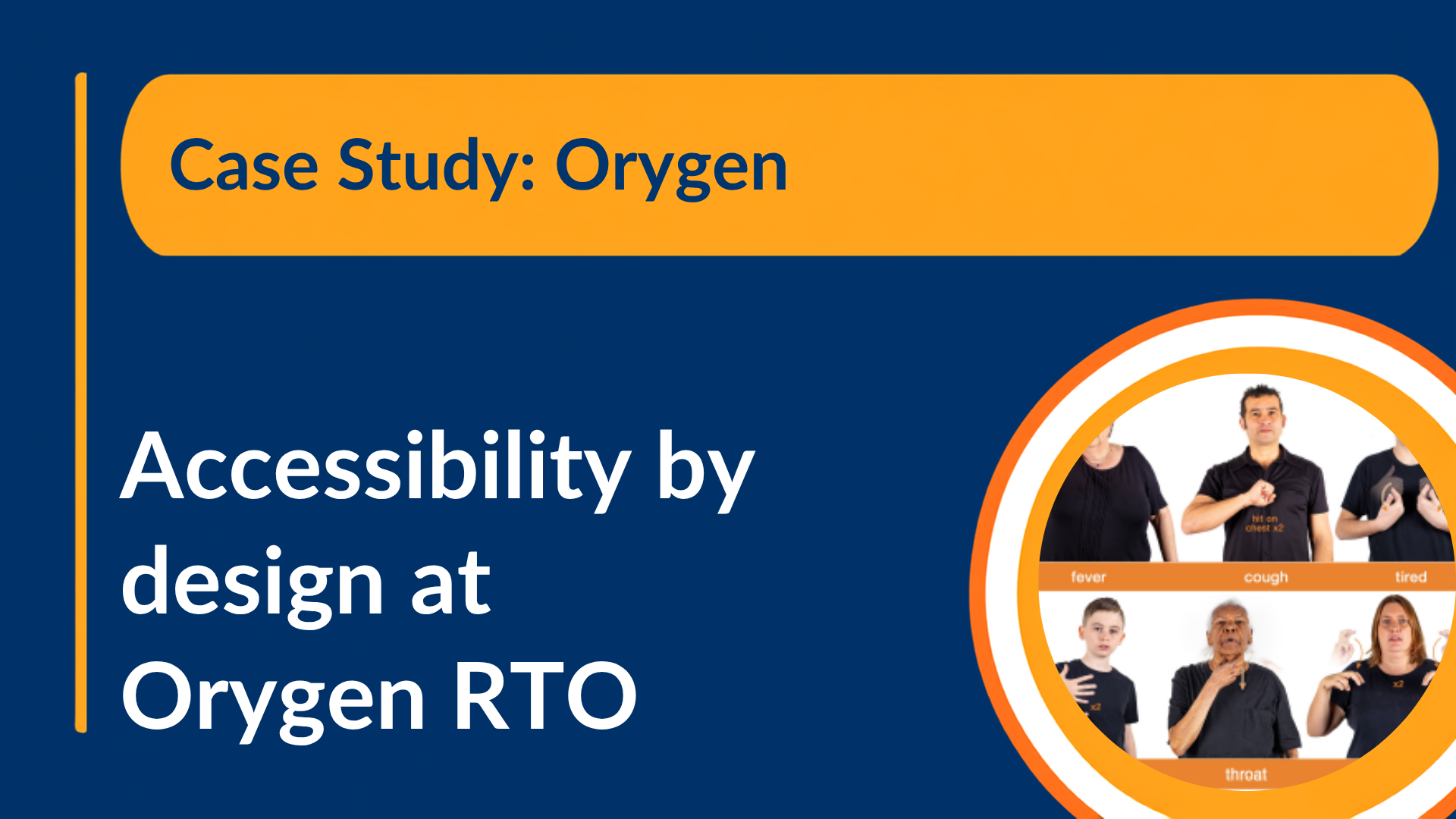
Accessibility by design at Orygen RTO
Orygen builds accessibility into its content and assessment from the start, with Auslan interpreting in every class.
Relating to RTO Standards
1.4 Principles of assessment
2.2 Suitability of training
2.3 Training support
2.4 Disability & reasonable adjustments
and more...