

ADCET UDL Symposium: Inclusive Learning in a Virtual Gallery Space
Online presentation
This project proposes the development and implementation of a virtual gallery platform to enhance inclusive learning experiences for all students, particularly those with disabilities, mental health challenges, neurodivergence, and varied cultural, linguistic, and educational backgrounds, offering multiple ways to participate and demonstrate knowledge.
The gallery will serve as both an assessment space and a learning environment, where students can upload posters, narrated presentations, or interactive media, while interactive, persona-based tutorials will provide guided learning experiences. Grounded in UDL principles, the platform will offer flexible, multimodal participation options that promote accessibility, autonomy, and engagement.
The initiative responds to accessibility and participation barriers in higher education, where traditional classroom formats often disadvantage students experiencing anxiety, sensory sensitivities, or communication challenges. By allowing students to present and interact through customisable personas in a virtual space, this project fosters student voice, choice, and ownership, key elements of inclusive pedagogy.
The gallery will be piloted in an RMIT STEM course in Semester 2, 2026. Students will upload assessment materials to a shared virtual space, encouraging peer learning, low-pressure discussions, and peer feedback. The platform will also explore interactive tutorials, where students attend as avatars or personas, thereby reducing social anxiety and enabling alternative modes of participation, such as chat, gesture-based responses, or visual cues, to promote accessibility.
Accessibility will be prioritised through compatibility with screen readers, captioning, and other assistive technologies. Feedback will be collected through student surveys to evaluate the impact on student confidence, engagement, and learning outcomes.
This online session will showcase the virtual gallery’s progress and design rationale to online and in-person participants. Through a short, scenario-based guided walkthrough, participants will experience the space from a learner’s perspective and be invited to provide feedback and reflect on how it applies to their own educational contexts, reinforcing relevance beyond the session.
Presenters
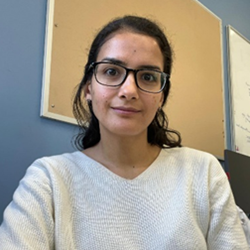
Dr Arianna Dick is an early career Lecturer in Food Technology at RMIT University and Program Manager of the Bachelor of Food Technology and Nutrition. Her research focuses on advanced food processing, with expertise in the physical, rheological and tribological characterisation of food materials. Arianna was awarded the RMIT School of Science Early Career Teaching Award for her 2024 teaching performance. Her teaching practice centres on inclusive and student centred assessment design, and she explores digital approaches to support effective feedback, student engagement and accessibility in large, diverse cohorts, aligned with Universal Design for Learning principles.

Thoa Mai Phuoc Nguyen is a Senior Learning Designer at RMIT University with extensive experience across HE and VET, specialising in curriculum design and digital pedagogy. Her work focuses on curriculum innovation and quality, grounded in a learner-centred approach that supports students from diverse backgrounds and learning needs. She collaborates with academics and professional staff to drive curriculum design and learning innovation, with UDL playing a key role in enhancing student engagement and learning experiences. She holds a Master of Education (Digital Technologies for Learning) and is a recipient of the STEM College Learning & Teaching Values in Action Award.

Keith Hibbert is a Virtual Reality and Immersive Learning Developer at RMIT University, specialising in the design and development of interactive experiences that enhance education and training. His work focuses on creating spatially rich virtual environments, digital twins, and AI-enhanced simulations that enable users to engage with complex, real-world scenarios. Keith has contributed to innovative projects in areas such as accident investigation, experiential learning, and immersive storytelling. With a strong interest in emerging technologies and human-centred design, he is dedicated to advancing how people learn, explore, and connect through immersive digital experiences and cutting-edge interactive media.
(June 2026)