

ADCET UDL Symposium: Designing GenAI for Inclusion, Not Shortcuts - A UDL-Aligned Approach to 24/7 Student Support
In-person presentation
Generative AI is becoming increasingly visible across tertiary education, yet much of the conversation continues to focus on risk rather than possibility. This presentation shared an early-stage, practice-based example of how generative AI can be intentionally designed to support inclusion, learner agency, and access, rather than assessment shortcuts.
The session drew on work within the Applied Health and Community Support team at University College, University of Tasmania, where a 24/7 AI-enabled student support tool has been introduced to complement existing teaching and support practices. Guided by Universal Design for Learning (UDL) Guidelines 3.0, the tool supports students with unit navigation, assessment clarification, academic skills, and general study questions. It deliberately avoids generating assessment answers or exemplars, instead providing prompts, explanations, and redirection to relevant learning resources.
This approach responds to common barriers experienced by students across both HE and VET contexts, including studying outside standard hours, balancing work and caring responsibilities, disability, anxiety, and language differences. Early reflections and emerging data from the initial implementation were shared to illustrate impacts on student confidence, help-seeking behaviour, and perceived belonging, while acknowledging the evolving nature of the evidence base.
Academic integrity and ethical use are addressed directly through clear design boundaries and ongoing oversight. The presentation positions generative AI as an assistive technology that can reduce systemic barriers and support learner independence, while maintaining the central role of educators and human connection.
The session included structured reflection prompts to support shared learning and practical transfer to participants’ own teaching and support contexts.
Presenter
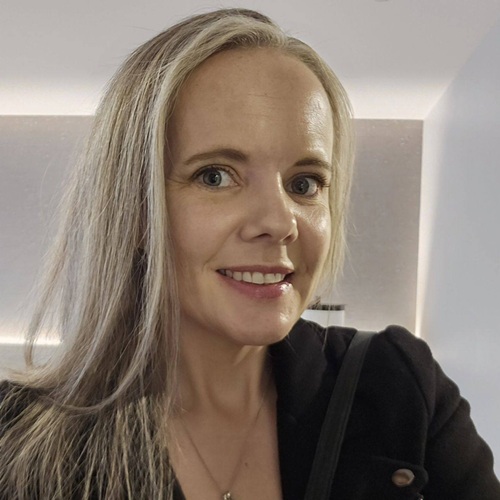
Kendal Sylvester is a Teaching Fellow at University College, University of Tasmania, where she coordinates units in the Health and Community Support program. Having navigated her own significant barriers to education, including leaving school without completing college and not learning to read until her later school years, Kendal brings a deeply lived understanding of what it means to struggle within systems that were not designed for everyone. That understanding sits at the heart of her work designing UDL-aligned, AI-assisted tools that support students around the clock.
(June 2026)