Home | Recordings | Presentation Information | Organising Committee
ADCET Universal Design for Learning (UDL) Symposium 2026
From Ideas to Impact - Sharing, Engaging, and Co-Designing Practice
The Australian Disability Clearinghouse on Education and Training (ADCET), in partnership with the University of Tasmania and the Australian Centre for Student Equity and Success (ACSES), held the Universal Design for Learning (UDL) Symposium 2026 in Hobart, Tasmania.
Explore the UDL Symposium 2026 Presentations
Event Overview
From Ideas to Impact: A Symposium to Remember
What an incredible few days it was at The Forest in Tasmania! The ADCET UDL Symposium 2026, hosted by the University of Tasmania, brought together 160 delegates in person and 366 online for three days of sharing, connecting and co-designing more inclusive tertiary education. From Hobart to lounge rooms and offices across the country and beyond, the energy and generosity of this community was felt everywhere.
A highlight of the Symposium was celebrating the inaugural ADCET UDL Awards 2026, proudly sponsored by ACSES and presented by Dr Matt Brett. Congratulations again to our incredible recipients:
- Kirsty Tod (RMIT), Leadership Award
- Kendal Sylvester (University of Tasmania), Impact Award
Their work exemplifies what this Symposium is all about: turning ideas into real, tangible impact for learners.
We were also so fortunate to be joined by our fabulous keynote speakers, Lillian Nave and Professor Kavita Rao, who brought such warmth, insight and inspiration to the Symposium. Both were wonderfully flexible and accommodating throughout, embracing the hybrid format and going above and beyond to connect with our online delegates as generously as our in-person audience.
None of this would have been possible without an enormous amount of behind-the-scenes work. Huge thanks to our wonderful organising committee, UTAS IT support team, and everyone who gave their time and expertise to shape this event. Thank you also to our online facilitators, or “Zoomies”, for making sure our remote delegates felt just as included as those in the room, true to the UDL spirit we all champion.
We are incredibly grateful to our partners the University of Tasmania and the Australian Centre for Student Equity and Success (ACSES) and our sponsors, whose support made the Symposium possible: Genio (Gold), Everway (formerly Texthelp) and Scanning Pens Australia (Silver), and Bradley Reporting for captioning.
To every single person who attended, presented, volunteered or tuned in remotely, thank you for making this Symposium such a special one. We cannot wait to see where the ideas from these few days lead next.
Participant feedback:
- I really loved everyone's energy and commitment to UDL and found the whole symposium a wonderful, positive experience - thanks to all involved, you did a fabulous job!
- It was thought-provoking to learn about contemporary research on UDL across the globe. It has given me a pathway to further guide my own research on UDL.
- My enthusiasm for UDL has only grown since attending the symposium, and I have since joined the Community of Practice to continue learning from and contributing to this wonderful community.
- This was really great, I've come away with a much greater understanding of UDL. And it felt very inclusive, it was great to see many of the presenters incorporating UDL in their own work and presentations.
- Wonderful organisation and facilitation for online attendees - appreciated your effort making it all so smooth!!
Symposium Aims
The UDL Symposium 2026 aimed to:
- Share and showcase knowledge and expertise in Universal Design for Learning
- Continue developing an Australia-wide network of UDL practitioners and researchers
- Unpack how UDL co-design can empower learners and improve outcomes
- Explore UDL practices and research which centres student perspectives and experiences
- Explore how UDL can be applied in our current and evolving tertiary education landscape
Facilitator
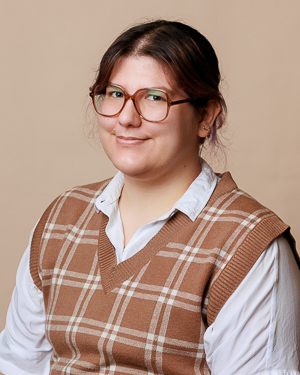
Dr Samantha Poulos is a feminist literary theorist with a background in first year teaching who now works to develop inclusive teaching practices and improve student engagement at the University of Sydney. They are an Educational Designer specialising in developing UDL practices and communities in tertiary institutions. Samantha is honoured to be returning as MC to the ADCET symposium this year and will continue to nurture joy and play in everything they do.
International Keynote Speakers
Lillian Nave
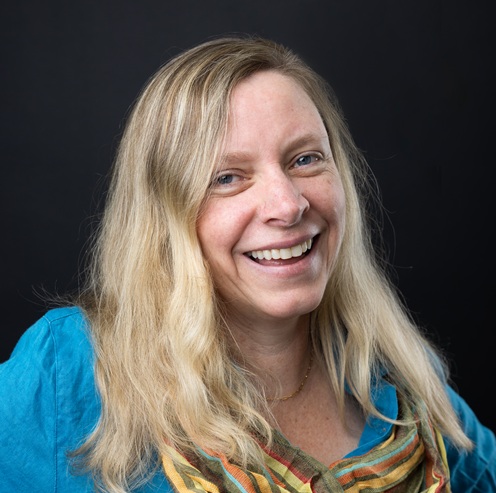
The Architecture of Empathy: Telling the Stories that Transform Tertiary Education
Empathy is more than a feeling: it is a practice, a story, and a shared act of meaning‑making. This keynote explored how empathy can move beyond sentiment and into structural, cultural, and relational change. It examined how empathy becomes visible through the stories we tell, the language we use, and the ways we invite others to understand experiences different from their own. Empathy is not a soft skill but a transformative force - one that reshapes systems, expands our collective imagination, and helps create universities where every learner can thrive.
Bio
Lillian Nave is the Faculty and Educational Development Specialist for Appalachian State University’s CETLSS (pronounced like Beatles) on the Hickory campus. A former art historian who fell in love with intercultural learning, she also teaches First Year Seminar and connects her students with peers across Europe, Africa, and Asia. She is the creator and host of the Think UDL podcast, now with more than 150 episodes and over 100,000 global downloads. Through the podcast, she interviews practitioners around the world who create more accessible and engaging learning environments for their students. Lillian is a listener who delights in connecting people and ideas, and she believes deeply in the power of connection and storytelling to transform teaching and learning. Her three college‑aged children serve as her “spies,” reporting back on what does and does not work in college courses, keeping her grounded in the real student experience. When she’s not teaching, podcasting, or collaborating with faculty, Lillian is an avid hiker exploring the Blue Ridge Mountains of North Carolina, where she finds inspiration, perspective, and plenty of new stories to tell.
Kavita Rao

Seen, Heard, and Supported: Leveraging Learner Assets with UDL
Every learner comes to the classroom with individual strengths and abilities, varied experiences and backgrounds, and specific interests and preferences. As educators, we can use learner variability as a starting point to design supportive and engaging learning experiences, and invite students to contribute their ideas, perspectives, and choices within the learning process.
This presentation addressed how educators can intentionally and proactively design learning environments and activities that reduce barriers, integrate supports and scaffolds, and leverage on learners’ assets. With the Universal Design for Learning (UDL) guidelines, we can undertake a step-by-step process to reflect and integrate strategies to support all learners. This session explored how UDL Guidelines 3.0 promote a learner-centred approach that postsecondary faculty and administrators can use to create inclusive learning environments that support student success.
This presentation highlighted:
- Learner-centred pedagogy: Considering learner variability as a basis for student success
- Proactive Design: Using UDL 3.0 to design learning experiences that support and scaffold learning for students
- Small Steps that Make A Difference: Integrating a UDL-based design process into practice
Bio
Kavita Rao is a Professor and Director of the College of Education Research Institute at the University of Hawai‘i at Mānoa. Her research and teaching focus on instructional and assistive technology, Universal Design for Learning (UDL), inclusive instructional design, online learning, and culturally and linguistically diverse learners. Kavita has conducted professional learning workshops on UDL, technology, and inclusive strategies in the US, the Pacific islands, and Asia. Kavita was the recipient of the inaugural David Rose UDL Research award in 2024. She has served on the Advisory Board of the Universal Design for Learning Implementation and Research Network (UDL-IRN), chaired the UDL-IRN Research Committee, and served as a member of CAST’s UDL Rising to Equity Advisory Board.
Prior to working at the University of Hawai‘i, Kavita was an educational technology specialist at Pacific Resources for Education and Learning (PREL). In this capacity, she provided professional development and technical assistance to state educational agencies and schools in Guam, American Samoa, Commonwealth of the Marianas Islands, Palau, Republic of the Marshall Islands, and the Federated States of Micronesia. Kavita has extensive experience developing curriculum resources, multimedia materials, and online programs for teachers. Kavita has been a consultant for UNESCO MGIEP (New Delhi, India), supporting the development of a Digital Pedagogy course, and collaborated with the International Baccalaureate Organization on a study of UDL implementation in IB schools worldwide.
Organising Committee
The 2026 ADCET UDL Symposium was brought to you by a dedicated team of professionals and students committed to advancing inclusive education practices. Our organising committee brought together diverse expertise in educational design, disability support, accessibility, and teaching innovation from across the tertiary education sector.
Our Valued Symposium Sponsors

The UDL Symposium 2026 is brought to you by ADCET
In partnership with


ADCET is funded by the Australian Government Department of Education