ADCET UDL Symposium: Beyond Commitments - Leveraging Cultural Capital and Positionality in Learning Design through UDL 3.0
In-person workshop
Universities frequently articulate commitments to diversity and inclusion, yet translating these commitments into meaningful institutional practice remains challenging. This 60 minute interactive workshop explores a critical gap in authentic representation: How do learning designers and educators actively represent and enhance the value of cultural capital embedded within their teams and the communities they serve?
UDL 3.0 Alignment: UDL 3.0's explicit recognition of representation and identity (Guideline 3) marks a significant evolution in inclusive design thinking. This workshop establishes why educator positionality and explicit recognition of identity are non-negotiable in authentic inclusive practice, moving beyond the surface-level compliance approach of earlier UDL versions. Drawing parallels with decolonising curriculum work and researcher reflexivity, the myth of neutrality was challenged, establishing that all educational work is inherently political. This recognition strengthens, rather than undermines, inclusive design.
Impact on Student Experience: When learning designers explicitly recognise and leverage cultural capital within their teams, students experience more authentic, culturally responsive curriculum design. Students from marginalised backgrounds particularly benefit when their identities and cultural assets are visibly valued in course design, learning materials, and institutional communications —directly supporting sense of belonging and retention.
This workshop equipped learning designers and educators with three ready-to-use tools and concrete practices:
- Conduct a Cultural Capital Audit of their learning design unit—identifying which diverse perspectives are leveraged in decision-making and which remain invisible
- Develop and integrate a Team Positionality Statement into their design workflows, making explicit the identities, values, and assumptions that shape their curriculum and pedagogical choices
- Apply the Diversity-UDL 3.0 Alignment Matrix to audit current diversity [worksheet/Qs] commitments against UDL 3.0 representation principles, identifying gaps and action priorities
All activities were designed to generate immediately applicable strategies.
Presenters

Dr Kashmira Dave is an award-winning, experienced academic and educational learning design specialist with over 20 years of experience in teaching, learning design, and research. Her work spans diverse fields, including learning and teaching in HE, curriculum development, learning design, third space, active learning, technology integration, inclusion and ePortfolios in higher education. As a Senior Lecturer in Academic Development at the University of New England, Kashmira leads professional development initiatives, supports curriculum innovation, and oversees projects that enhance SoTL for academic staff. Kashmira is a published researcher and reviewer; her passion is advancing educational practices through evidence-based strategies, fostering a community of practice in higher education.
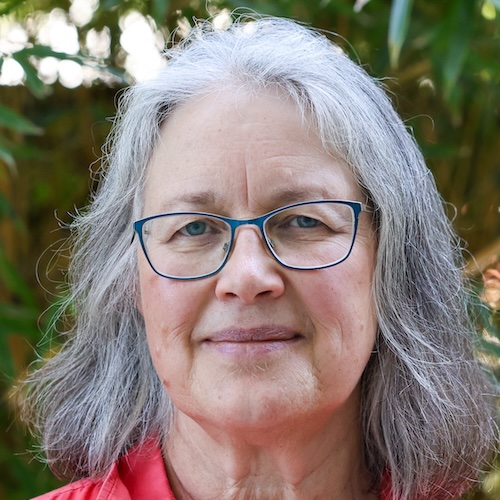
Penny Wheeler is updating her knowledge and implementing UDL principles in her current studies in learning design. She has been seeing the connections between UDL and her other recent work in how peace, compassion and empathy is represented and activated in language. Penny has worked in higher education for more than 20 years, teaching and researching in educational technology, higher education policy and curriculum and learning materials design as an academic developer, an e-learning adviser, a program administrator, and an instructional editor: a typically varied third space career. She is a convenor of the ASCILITE (Australasian Society for Computers in Learning in Tertiary Education) TELedvisors Network.
(June 2026)