ADCET UDL Symposium: Co‑Designing UDL‑Aligned Summative Assessment for Care Sector Training - A Case Study with CALD Adult Learners
In-person presentation
This presentation shared insights analysis from a survey of 46 Vietnamese‑Australian community members, pre‑learners, and experienced care workers about what matters in care. Overall, their answers converged: cultural values like filial piety and respect for elders are not obstacles to professional practice, they are its foundation. Nine out of ten workers identified their cultural background as an asset to care delivery. Yet current training and assessment in the Entry into Care Role Skill Set does not recognise these strengths, and seven out of ten workers described boundary challenges no existing curriculum prepares them for.
The findings emerged from a co‑design process within a project led by a multicultural Adult Community Education provider, with RTO partner and aged care/NDIS employers. Surveying across three groups of Vietnamese Australian (general community members, experienced support workers, and foundation learners ready to enrol into a skill set in health care training), we documented how literacy demands in standard summative assessment function as barriers unrelated to workplace competence (Black & Yasukawa, 2014), while culturally responsive pedagogy calls for assessment that builds on learner strengths rather than treating difference as deficit (Gay, 2018).
The data pointed toward a clear need: summative assessment for accredited care skill sets must be redesigned using UDL 3.0 principles, so CALD learners can demonstrate competency through situated practice rather than decontextualised writing (Boud & Falchikov, 2006). This means co‑designing observation rubrics, video evidence, and scenario‑based assessments with community, RTO, and industry input. In this project, we use AI‑assisted development of multilingual resources to legitimise bilingual care, building assessment around what workers actually do at work, not what they can write in English.
This presentation proposed a co‑design framework for inclusive assessment. Attendees left with strategies for redesigning assessment that unlocks the capability of learners currently assessed out rather than educated in.
References
Black, S. & Yasukawa, K. (2014). The literacy myth continues: adapting Graff’s thesis to contemporary policy discourses on adult ‘foundation skills’ in Australia. Critical Studies in Education, 55(2), 213–228.
Boud, D. & Falchikov, N. (2006). Aligning assessment with long‑term learning. Assessment & Evaluation in Higher Education, 31(4), 399–413.
CAST (2024). Universal Design for Learning Guidelines version 3.0.
Gay, G. (2018). Culturally Responsive Teaching: Theory, Research, and Practice (3rd ed.). Teachers College Press.
Presenters
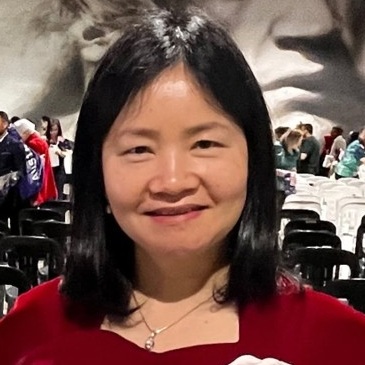
Hang Ngo is an innovative educator and researcher at the intersection of cultural education, language pedagogy, and educational technology. With over 15 years of experience spanning secondary schools, universities, and community education across Vietnam and Australia, she brings a unique cross-cultural perspective to educational innovation. Hang is currently serving at multiple organisations, including being an Affiliate Researcher at Thang Long University, ACE Team Leader at CAaSSA, and a teacher at Mount Carmel College. Hang bridges cultural divides while advancing educational innovation. She is currently interested in developing AI-enhanced teaching methodologies that, grounded in the Universal Design for Learning (UDL) framework, support culturally responsive education and create inclusive learning environments where every learner can engage with, access, and demonstrate their knowledge in multiple ways.
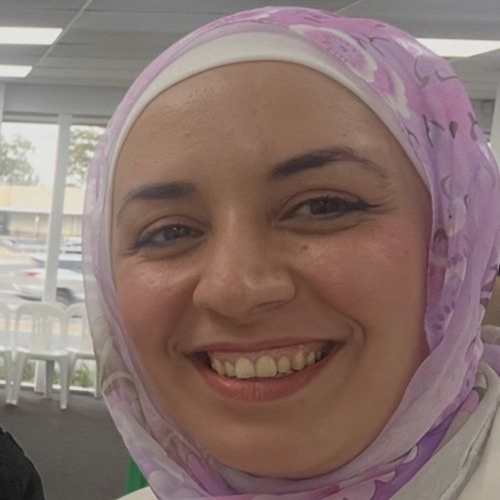
Salam Alwani is the Project Coordinator at CAASSA in Adelaide, where she works closely with culturally and linguistically diverse communities to support education, settlement, and community participation. She also works as an AMEP lecturer at TAFE SA. Salam completed her Graduate Diploma in TESOL in 2024. As a mum of four and someone with lived refugee experience herself, she is passionate about supporting multicultural communities through education, connection, and community work. She also serves as the Vice President of Syrian Families in South Australia Inc., advocating for stronger support and opportunities for migrant and refugee families.
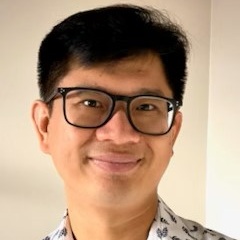
Chanmakara (Mak) Sun is an Educator at the Australian Nursing and Midwifery Education Centre (ANMEC) teaching Certificate III Individual Support (Ageing and Disability). He is a Registered Nurse and a Co-founder/CEO of a Not-for-profit organisation, Malex Care Inc. He has worked as a Clinical Nurse at a large metropolitan hospital in the Geriatric Evaluation and Management unit where he coordinates patient flow from Emergency Department, Short Stay Medical Unit and other units by reviewing and admitting into the program. Prior to working at the hospital, he worked at a Residential Care Facility as a Personal Carer as well as working in a leadership role as a Clinical Nurse.
(June 2026)