Home | Recordings | Presentation Information | Organising Committee
Gallery Presentations
List of Gallery Presentations
Art-Based Learning: A Creative Approach to Teaching Theory
Annika Patmore, Lecturer, James Cook University
Presenter/s: In-person
Level: Beginner
The OT Models ‘Art Series’ was developed to transform the traditionally text-based teaching of theoretical models into a creative and inclusive learning experience. It introduces art-based, hands‑on activities to help students grasp complex concepts with greater ease. In line with UDL 3.0, the art series recognises that learners’ diverse identities and preferences are central to creating an inclusive educational environment. This demonstration will allow Annika to share some of the physical items from her presentation which will be held earlier on the Thursday. However, it is not necessary to attend the presentation in order to benefit from this display.
Annika Patmore
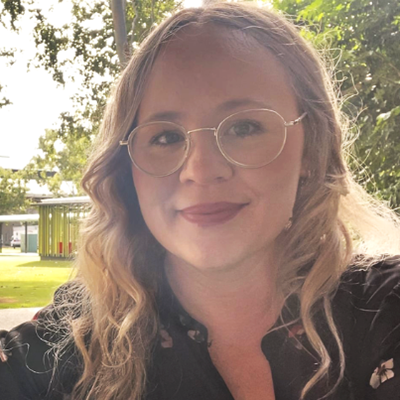
Annika Patmore (she/her) is an occupational therapist and lecturer at James Cook University. She spent over a decade in clinical practice before transitioning to academia in 2022. Her professional interest areas include sexuality and intimacy, healthy ageing and culturally responsive practice. Annika primarily teaches first year occupational therapy students and is committed to supporting students as they navigate the transition to university life, recognising that each student arrives with a different background, different needs and access to support.
Abstract - Art-Based Learning
Theoretical models have traditionally been taught in the first, foundational year of the James Cook University Occupational Therapy course. It has been observed that learning these heavy theoretical concepts often felt overwhelming to students - some students struggled to sustain attention, others to process large volumes of text and many found it difficult to visualise how elements of each model fit together. Recognising that this knowledge is essential for becoming an Occupational Therapist, it was important to explore more engaging ways to teach this topic, so all students could fully participate, not just those suited to traditional academic approaches.
This period of exploration ultimately let to the development of the OT Models ‘Art Series’. Learner-centred and focusing on engagement, creativity and expression, the art series takes place over several weeks of teaching. For each theoretical model, students are presented with a different art medium - clay, paint, collage and edible art. The outcome has been a colourful and stimulating classroom with high levels of engagement. Here, creativity and play contribute to deeper learning.
Direct student feedback indicates that having kinaesthetic, creative opportunities in class helped them to grasp ideas they had previously found frustrating or abstract. Alignment has also been identified with First Nations pedagogical framework for culturally responsive education, ‘8 Ways of Knowing’, which identifies visual and hands on approaches as key pathways to knowledge.
In line with UDL 3.0, the art series recognises that learners’ diverse identities and preferences are central to creating an inclusive educational environment. This presentation will provide an overview of the ‘Art Series’, including preparation processes, a showcase of the art and a reflection on lessons learned along the way.
Increasing University Learners Engagement and Retention by Co-Designing Resources Based on UDL Principles
Dr Christine Krol, Assoc. Lecturer / Researcher, Western Sydney University
Presenter/s: In-person
Level: Beginner
The goal of universal design for learning Guideline 3.0 is learner agency that is purposeful and reflective, resourceful and authentic, strategic and action orientated. This research aims to increase a first-year diverse cohort of university learners’ sense of belonging by co-designing accessible resources and provide meaningful assessment feedforward.
Dr Christine Krol

Dr Christine Krol is a social work academic/researcher from Western Sydney University who supports the learning journey of emerging social workers. Her passion is for achieving an inclusive and socially just society. Research areas piquing interest include the intersection between the equitable participation of higher education students with disability and diverse equity groups (under the United Nations Sustainable Development Goal Four, Quality education) and promoting and using a universal design for learning (UDL) pedagogy.
Abstract - Increasing University Learners Engagement and Retention
Australian university learners are diverse, this includes first in family, mature aged, First Nations peoples, English is a second or more language, from low-socio-economic areas, single parents, carers, and/or people with disability. At times, these marginalised groups can struggle to develop their sense of belonging in higher education settings. Additionally, it can be costly for people with disability to obtain diagnosis documentation to obtain reasonable adjustment plans, these are affirmative or reactive strategies. Whereas using universal design for learning (UDL) strategies reframes access to being available for all and better places diverse learners at the centre of curricula design, that is, taking a transformative approach that does not rely solely on learners seeking formal support.
CAST’s Guideline 3.0 places the learners at the centre of their learning experiences rather than the educators as the experts. Learner agency that is purposeful and reflective, resourceful and authentic, strategic and action orientated. In a first-year subject, learners at risk of attrition from either non-submission or less than ideal assessments have often been reflected among those opting not to participate in on campus workshops. Many were new to university or had recently arrived in Australia.
This research project aims to increase this diverse cohort of learners’ sense of belonging by co-designing accessible resources which are available to all and help to provide timely and meaningful assessment feedforward. Findings demonstrate that learners value being able to contribute to the improvements of the subject’s resources based on their contributions.
The gallery presentation’s resources have been designed to be digitally accessible and have been provided to the organisers for distribution. Handouts will also be available during the in-person event. This embodies providing information and content in multiple ways. The goal for this poster presentation is to open conversations and share UDL strategies that can benefit all participants.
Addressing Hidden Curriculum in HE Music: A UDL Approach to Accessible Music Industry Pathways
Monique Boggia, Academic Course Manager (Bachelor of Music Industry, Performance), Box Hill Institute
Presenter/s: In-person
Level: Beginner
This gallery poster explores hidden curriculum as a barrier to success in contemporary music higher education and shows how UDL-informed design can make executive function demands visible to improve accessibility, retention, and inclusive pathways into music industry practice.
Monique Boggia
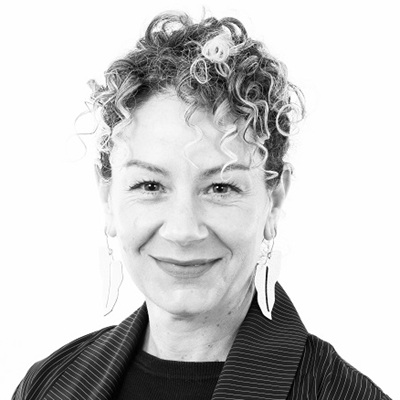
Monique Boggia is a Melbourne based musician, educator, and higher education leader with experience across primary, secondary, vocational, and higher education music settings. She has held teaching and leadership roles at Collarts, JMC, and Box Hill Institute, where she is currently Academic Course Manager for the Bachelor of Music Industry (Performance). Monique holds qualifications in music performance, education, global studies, and trauma-informed creative arts practice and indigenous perspectives. Her work is shaped by a strong commitment to accessible, inclusive music education and to supporting diverse learners to thrive in contemporary higher education and the evolving global music industry.
Abstract - Addressing Hidden Curriculum in HE Music
This gallery presentation explores how executive functioning shapes the hidden curriculum of tertiary contemporary music education, and how these demands influence students' progression from classroom learning to sustainable music industry pathways. Drawing on practitioner experience in higher education music program design, the poster highlights how assessment expectations assume a range of implicit skills including planning, collaborating and self-directed reflection, which are not always explicitly taught. Informed by student feedback, course evaluation insights, assessment review data and patterns in student support requests, the poster identifies how hidden demands can impact student experience, progression and pathways. When left unaddressed, these demands create inequitable participation, particularly for students who are neurodivergent, culturally diverse, or entering through non-traditional pathways.
The presentation positions hidden curriculum as a barrier to student success in contemporary music higher education and uses UDL-informed strategies to identify and reduce these barriers, supporting retention, learner agency, and career readiness. In line with UDL 3.0, it emphasises barrier reduction and design for learner variability across engagement, representation, and action and expression, using scaffolded structures, multimodal resources, flexible pathways, and iterative assessment design to connect executive functioning with inclusive course design.
Guided examples uncover hidden curriculum pressures in tertiary music contexts and demonstrate UDL-informed strategies that participants can adapt to their own educational settings. Accessible to participants with little to no prior UDL expertise, with value for those seeking deeper insights, the poster illustrates how centering student agency in course design can better prepare students for the collaborative, self-directed, and organisational demands of music industry practice — making expectations more visible, learning more accessible, and pathways more inclusive.
The presentation aligns with symposium themes of accessibility, executive functioning, authentic representation, and innovative UDL practices in teaching and learning. It supports both in-person and online participants through an accessible poster, a captioned digital version, and reflective prompts.
From Ideas to Impact: A Lived-Experience Journey from Student to UDL Researcher and Founder
Aaron Saint-James, MRes Candidate and Lived-Experience Researcher, UNSW Sydney
Presenter/s: In-person
Level: Beginner
A lived-experience journey through Universal Design for Learning, from entering university as a neurodivergent student, to co-founding a disability-led initiative, to research and building inclusive-design tools. The through-line is co-design: that those most affected by exclusionary design should author the response to it.
Aaron Saint-James
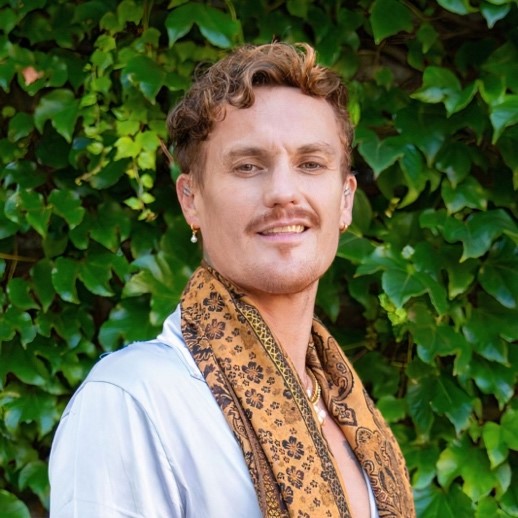
Aaron Saint-James (he/him) is a neurodivergent researcher, advocate, and founder undertaking a Master by Research in inclusive education at UNSW Sydney, mapping how Universal Design for Learning is delivered across Australian higher education. A neurodivergent, queer, first-generation, and chronically-ill graduate, Aaron co-founded the Diversified Project, is a Research Fellow with the Neurodiversity Foundation (Netherlands), and a 2026 NDRP Disability Research Leadership Fellow. He is the founder of Simplifii, a neuroinclusive learning platform built from lived experience. His work is recognised by the 2026 ADCET Accessibility in Action Award and the UN SDG Global Citizenship Award (APRU, 2025).
Abstract - From Ideas to Impact
This gallery presentation traces a six-year journey through Universal Design for Learning, told from the inside, by a neurodivergent, disabled, first-generation researcher and founder whose journey began as a student.
It begins in 2020, starting university as a mature-aged student navigating systems that were not built with learner variability in mind. In 2021, that experience led to co-founding the Diversified Project, an initiative grounded in disability-led co-production. The years that followed brought research, publication, and a growing conviction that inclusive education has to be designed proactively, not retrofitted through individual accommodation. After graduating in 2025, this work continued into a Master of Research mapping how Universal Design for Learning is taken up across Australian higher education.
The journey's current destination is Simplifii OS, a system that translates what six years inside these systems has taught me into practical support for neurodivergent and marginalised students, built around the executive-functioning and engagement barriers that lived experience surfaces and audits alone can miss.
The through-line is co-design: the principle that the people most affected by exclusionary design are not its subjects but its authors. This presentation offers that arc as a single visual map, from student, to co-founder, to researcher, to founder, and invites conversation about what changes when UDL is led by the people it is meant to serve.
This is a journey still in progress. Its value lies less in arrival than in what each step revealed.
Designing Academic Integrity for All: A UDL Journey in Building an Inclusive Academic Integrity Module
Ameeta Prakash, Digital Capability Adviser; Margaret Hunn, Learning Adviser; Jennifer Kemp-Smith, Learning Adviser, Griffith University
Presenter/s: Online
Level: Intermediate
In this gallery presentation, we showcase the UDL-guided redesign of a compulsory academic integrity module. Through accessible design, authentic scenarios, and interactive learning, the project demonstrates how UDL can reduce barriers and support diverse student engagement.
Ameeta Prakash, Jennifer Kemp Smith and Margaret Hunn
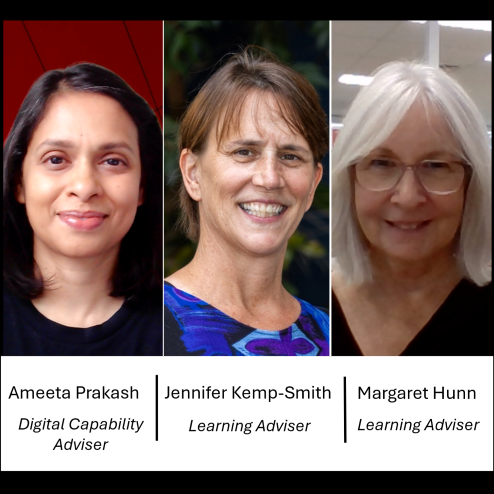
Ameeta Prakash, Jennifer Kemp Smith, and Margaret Hunn are experienced learning and digital capability advisers at Griffith University. Collectively, they bring over two decades of expertise in higher education teaching, academic skills development, and student support. Their professional interests span digital and information literacy, data literacy, academic writing, and the ethical use of educational technologies. They are particularly focused on supporting students to develop transferable skills and to communicate research effectively to diverse audiences. Together, they have contributed to scholarly publications and conference presentations on embedded information literacy and digitally enabled learning in higher education.
Abstract - Designing Academic Integrity for All
Mandatory academic integrity modules are often compliance-focused, text-heavy, and difficult for diverse learners to navigate. At Griffith University, a cross-functional team of Learning Advisers, Librarians, and a Digital Capability Adviser undertook a redesign of a compulsory Academic Integrity module guided by Universal Design for Learning (UDL) principles to reduce barriers and better support learner variability, recognising that students engage with academic integrity concepts in different ways and require multiple pathways to understanding.
The gallery video presentation will share our UDL design journey, highlighting how accessibility and inclusion were embedded through early collaboration with Disability Services rather than retrofitted. The module was intentionally developed to support both scaffolded and self-guided learning, enabling students to move through content at their own pace while building understanding through progressively structured activities.
Key design features include Auslan interpretation, high-contrast visual design, accessible H5P elements, and responsive layouts that enable seamless use across desktop and mobile devices. Authentic case studies contextualise academic integrity challenges and encourage students to apply principles in realistic scenarios, providing multiple pathways for engagement and meaning-making. In 2025-26, the module recorded 24,830 student completions, highlighting its scale and impact as an accessible, institution-wide resource supporting academic integrity learning.
The gallery artefact will take the form of a short video presentation offering a visual walkthrough of the module and the decisions that shaped its development. The goal is to illustrate how UDL-informed design can transform mandatory institutional resources into accessible, engaging learning experiences that support learner agency, flexible pathways to understanding, and academic success at scale.
Our Valued Symposium Sponsors

The UDL Symposium 2026 is brought to you by ADCET
In partnership with


ADCET is funded by the Australian Government Department of Education