Home | Registration | UDL Awards | Accommodation | Sponsors | Disability Access | FAQs
Program | Presentation Information | Masterclasses | Keynotes
Masterclasses - Wednesday 24 June 2026
ADCET in partnership with the Australian Centre for Student Equity and Success (ACSES) are hosting a series of in-person Masterclasses that will be held on Wednesday afternoon 24 June 2026 prior to the official start of the UDL Symposium.
For our online participants, we will also be hosting a free special UDL Studio session on Wednesday afternoon. Registration links below.
Please note: the in-person masterclasses are not an official part of the Symposium and require a separate registration and payment. Places are limited, so early registration is encouraged.
Session Details
Participants may only register for one session per time slot.
Session 1: 1:00 to 2:00 pm AEST (1 hour) - $30
Choose one of the following:
- Finding Your Why: Storytelling Practices for Communicating Empathy and Purpose
Lillian Nave, Faculty and Educational Development Specialist, Appalachian State University - (How) Does UDL Work?
Kavita Rao, Professor and Director of the College of Education Research Institute, University of Hawai‘i
Session 2: 2:30 to 4:30 pm AEST (2 hours) - $40
Choose one of the following:
- Applying Universal Design for Learning to Assessment in Australian VET Contexts
Trina Bianchini, Teaching and Learning Specialist, TAFE SA and Jennifer Cousins, Coordinator, Positive Partnerships - Leading and Embedding UDL in University Contexts
Dr Matt Brett, ACSES and Director of Academic Governance and Standards, Deakin University - Beyond Accessibility: Neurodivergent Students’ Experiences of Universal Design for Learning in Higher Education
Ari Star, Research Assistant, Macquarie University
Registrations have now closed
Online Session: 2:00 to 4:00 pm AEST (2 hours) - Free
Online participants have the option to attend a special free 2 hour drop-in UDL Studio session. This session is specifically designed for online registrants to come along and ask their UDL related questions, hear from other practitioners, or you can simply just lurk and learn.
Registrations have now closed
Masterclass Options - Session 1
Finding Your Why: Storytelling Practices for Communicating Empathy and Purpose

Lillian Nave, Faculty and Educational Development Specialist, Appalachian State University
This interactive workshop invites participants to move from understanding empathy to practicing it through the stories they tell about their work, their values, and the communities they serve. Building on the keynote’s central idea—that empathy is a transformative force expressed through narrative—this session guides participants in uncovering and shaping the stories that reveal their own “why.” The workshop emphasizes communication strategies that build trust, deepen connection, and invite others into meaningful understanding across difference. This workshop is designed to be reflective, energizing, and deeply human, offering participants a space to reconnect with the heart of their work and the stories that sustain it.
Lillian Nave
Lillian Nave is the Faculty and Educational Development Specialist for Appalachian State University’s CETLSS (pronounced like Beatles) on the Hickory campus. A former art historian who fell in love with intercultural learning, she also teaches First Year Seminar and connects her students with peers across Europe, Africa, and Asia. She is the creator and host of the Think UDL podcast, now with more than 150 episodes and over 100,000 global downloads. Through the podcast, she interviews practitioners around the world who create more accessible and engaging learning environments for their students. Lillian is a listener who delights in connecting people and ideas, and she believes deeply in the power of connection and storytelling to transform teaching and learning. Her three college‑aged children serve as her “spies,” reporting back on what does and does not work in college courses, keeping her grounded in the real student experience. When she’s not teaching, podcasting, or collaborating with faculty, Lillian is an avid hiker exploring the Blue Ridge Mountains of North Carolina, where she finds inspiration, perspective, and plenty of new stories to tell.
(How) Does UDL Work?

Kavita Rao, Professor and Director of the College of Education Research Institute, University of Hawai‘i
Is UDL effective? For over two decades, the field has been grappling with the question of how to measure UDL.
Let’s reframe this question to get to the heart of what UDL is - an instructional design framework that can help us create more flexible and inclusive learning environments. The key to determining UDL’s efficacy is to examine HOW UDL works rather than whether it works.
As educators, we can apply UDL to our practices to support student success, leverage on learners’ assets, and create learning spaces that are inviting for all. Using a proactive and systematic approach, we can make and document decisions about how we use UDL and assess whether these applications of UDL have intended outcomes.
In this master class, learn how the UDL Reporting Criteria (UDL RC) to share our stories of UDL implementation. The UDL RC provide a framework for articulating how we use UDL and identifying outcomes associated with our UDL-based designs. Whether you are designing lesson plans, learning activities, educational programs or considering ways to integrate technology, the UDL Reporting Criteria can help you clearly describe your intentional design process. This, in turn, can create opportunities for co-designing with students and influencing others to engage in inclusive and intentional design. This workshop is useful for faculty and educational practitioners who seek to articulate how they are transforming their work to support all learners and to publish or present about their use of UDL and inclusive practices.
Kavita Rao
Kavita Rao is a Professor and Director of the College of Education Research Institute at the University of Hawai‘i at Mānoa. Her research and teaching focus on instructional and assistive technology, Universal Design for Learning (UDL), inclusive instructional design, online learning, and culturally and linguistically diverse learners. Kavita has conducted professional learning workshops on UDL, technology, and inclusive strategies in the US, the Pacific islands, and Asia. Kavita was the recipient of the inaugural David Rose UDL Research award in 2024. She has served on the Advisory Board of the Universal Design for Learning Implementation and Research Network (UDL-IRN), chaired the UDL-IRN Research Committee, and served as a member of CAST’s UDL Rising to Equity Advisory Board.
Prior to working at the University of Hawai‘i, Kavita was an educational technology specialist at Pacific Resources for Education and Learning (PREL). In this capacity, she provided professional development and technical assistance to state educational agencies and schools in Guam, American Samoa, Commonwealth of the Marianas Islands, Palau, Republic of the Marshall Islands, and the Federated States of Micronesia. Kavita has extensive experience developing curriculum resources, multimedia materials, and online programs for teachers. Kavita has been a consultant for UNESCO MGIEP (New Delhi, India), supporting the development of a Digital Pedagogy course, and collaborated with the International Baccalaureate Organization on a study of UDL implementation in IB schools worldwide.
Masterclass Options - Session 2
Applying Universal Design for Learning to Assessment in Australian VET Contexts
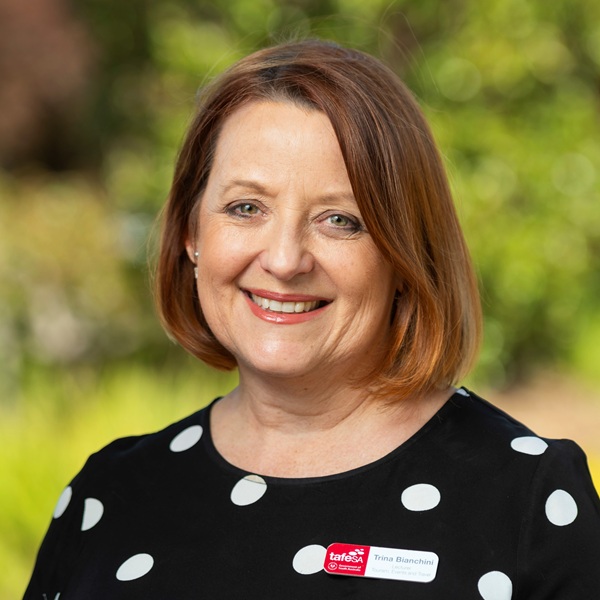
Trina Bianchini, Teaching and Learning Specialist, TAFE SA
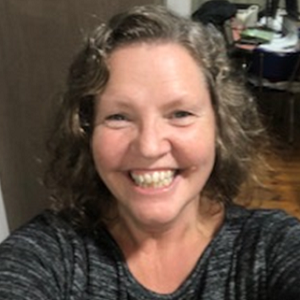
Jennifer Cousins, Coordinator, Positive Partnerships
This two-hour, hands-on workshop equips VET assessors, trainers, instructional designers, and compliance staff with practical ways to apply Universal Design for Learning (UDL) to competency-based assessment -without compromising evidence integrity or industry standards. Participants will learn to analyse current tools, identify common barriers, and redesign assessment tasks so that diverse learners can generate valid, reliable, sufficient, authentic, and current evidence. Framed for Australian VET practice, the session clarifies how UDL broadens pathways to evidence while aligning with reasonable adjustment obligations and the Standards for Registered Training Organisations (RTOs)2025.
The workshop opens with a brief myth busting activity to identify and correct common misconceptions (e.g., “UDL lowers standards”), followed by a brief discussion of current drivers and impacts. This is followed by a mini demo that contrasts a traditional written knowledge test with a UDL enhanced version that offers options such as audio responses, diagrams, flowcharts, demonstration, and verbal questioning – while maintaining clear mapping of performance criteria and knowledge evidence requirements. This sequence establishes the core message: UDL supports equity and clarity in assessment design without diluting the benchmark.
Participants then move through a series of structured activities including:
- Exploration of real VET assessment samples to locate representation, action and expression, and engagement barriers.
- Redesign of one assessment task using the three UDL principles, producing a “Before & After” snapshot that documents barriers addressed, options added, and compliance checks completed.
- Review of assessment redesigns and application of a traffic light peer review to confirm authenticity, mapping clarity, and feasibility.
- Exploration of ready to use toolkit strategies assessors can implement immediately.
The session closes with a “Plus One +” action plan where each participant commits to an immediate change in one assessment tool and longer-term approach. Participants will receive resources: a UDL+VET checklist, a “Quick Conversions” cheat sheet, mapping templates embedding UDL elements, and examples of accessible instructions. Attendees leave with evidence focused language, redesigned assessment options, and practical resources to scale UDL across assessment tools —improving access and fairness while strengthening compliance.
Trina Bianchini
Trina Bianchini is employed at TAFE SA in Academic Development, as a Teaching and Learning Specialist with a special portfolio of Accessibility and Inclusive Education. This role involves providing leadership to teaching programs through quality and innovation to deliver positive student experiences and successful outcomes. Trina is a passionate advocate of Universal Design for Learning (UDL) as it drives principles of accessibility, usability and quality learning design addressing both digital content and effective facilitation methods utilising digital tools. Trina facilitates the UDL in Tertiary Education Community of Practice with members from across Australia/New Zealand and a lead in the TAFE SA Co-Design Network who are tasked with designing and implementing an Inclusive Teaching and Learning framework at TAFE SA.
Jennifer Cousins
Jennifer Cousins has had the privilege of working as a Developmental Educator, Disability Advocate, VET Practitioner, and Teaching and Learning Specialist in Accessibility and Inclusive Education. Throughout her career, she has supported individuals with diverse needs in planning and managing their educational journeys, while also collaborating with educators to develop inclusive teaching strategies. Her qualifications in Disability, Law, and Education, combined with extensive professional experience, underpin a strong commitment to empowering students with varied support needs. She has worked extensively with the Australian Disability Clearinghouse on Education and Training (ADCET) to develop a range of online training resources for the tertiary education sector, with a focus on access, inclusion, and Universal Design for Learning (UDL). Jennifer is deeply committed to the belief that we all engage with the world through different ways of knowing, doing, and being—and that inclusive education must reflect and honour that diversity.
Leading and Embedding UDL in University Contexts

Dr Matt Brett, Director of Academic Governance and Standards, Deakin University
Universities have been described as ‘peculiar organisations’. They are ‘quasi-sovereign’ with self-accrediting authority. They have ‘positional centrality’ given their intersection with an array of social, economic, and political systems. They must also satisfy diverse stakeholder expectations that in many cases are mutually exclusive. Australian universities are large by global standards, magnifying the challenges of leadership and management in university contexts.
The complexity of Australian universities (and analogous tertiary institutions) poses specific challenges for advancing a Universal Design for Learning (UDL) agenda. There is a groundswell of interest in UDL across the sector, but the transition from a growing commitment to the sustainable embedding of UDL in institutional strategy, policy, culture, and practice is not inevitable.
This workshop will explore the challenges of leading UDL in university (and analogous tertiary) contexts. Participants will engage in critical reflection on what works, and what is challenging in leading an UDL agenda. This will be informed by baseline data on the extent to which UDL is (or is not) already a feature of university strategy, policy, and practice. The workshop will provide practical strategies for UDL leaders in hastening the embedding of UDL within their specific and peculiar institutional context.
Dr Matt Brett
Dr Matt Brett is Director of Academic Governance and Standards at Deakin University. He is also an Adjunct Professor with ACSES at Curtin University and Project Director for the ACSES Disability Support Program Capacity Building Fund Project. Matt is a CODA (Child of Deaf Adults), and his lifelong experience of disability has informed a longstanding commitment to student equity spanning roles in research, policy and practice. Matt convened the 2011 National Summit on the Mental Health of Tertiary Students, and co-edited Student Equity in Australian Higher Education: 25 Years of A Fair Chance For All'. He is also a non-executive director of Expression Australia.
Beyond Accessibility: Neurodivergent Students’ Experiences of Universal Design for Learning in Higher Education
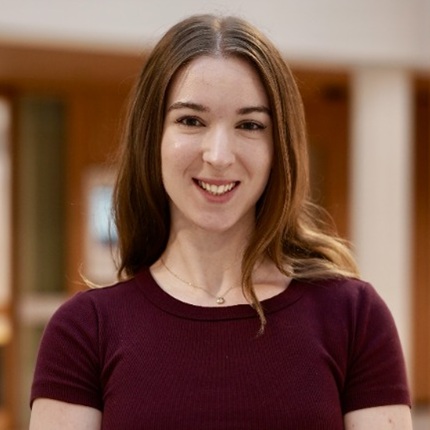
Ari Star, Research Assistant, Macquarie University
What does inclusive teaching actually look like from a student's perspective — and how big is the gap between our intentions and their experience?
This two-hour masterclass invites university teaching staff to move beyond accessibility as an afterthought and explore Universal Design for Learning (UDL) as a proactive, practical framework for closing that gap. Designed for unit convenors, lecturers, tutors, and learning designers, the session centres the voices of neurodivergent students — including people with disability — to illuminate the real barriers that too often lead to burnout, disengagement, and frustration.
Participants will explore how everyday demands around sensory and cognitive load, executive functioning, and policy inflexibility affect student wellbeing and motivation. Using a straightforward Gap Analysis tool, you will examine your own teaching context, comparing intended supports with actual student experience.
The session is practical and discipline-relevant. You will leave having redesigned at least one element of your unit using a UDL lens, and with two realistic, committed actions to improve inclusivity — one you can implement immediately, and one for your next offering.
UDL is not about making ad hoc adjustments for individual students - it is about designing out predictable barriers from the start. Come ready to reflect, collaborate, and make meaningful change.
Ari Star
Ari Star is a passionate researcher and advocate and has recently completed a Master of Research at Macquarie University, where her thesis explored the influence of Universal Design for Learning (UDL) on the experiences of neurodivergent students in higher education. Ari is enthusiastic about bringing lived experience of disability to her work and enjoys participating in co-designed projects with other neurodivergent researchers. Through her research and advocacy work she aims to improve educational spaces to better anticipate and respond to the needs of neurodivergent people by listening to their preferences rather than assuming their requirements.
Key dates
Registrations close
In-person: Wednesday 17 June 2026 5:00 pm AEST
Online: Friday 19 June 2026 5:00 pm AESTStudent Sponsorship applications close: Friday 29 May 2026 (Student sponsorship applications)
ADCET UDL Awards nominations close: Monday 1 June 2026
Masterclass registration closing date: Friday 19 June 2026
Our Valued Symposium Sponsors

The UDL Symposium 2026 is brought to you by ADCET
In partnership with


ADCET is funded by the Australian Government Department of Education