2026 ADCET UDL Symposium – A Student Reflection
What does it mean to create a learning environment where everyone feels they belong, can participate meaningfully, and has an ongoing opportunity to thrive? This was a question at the heart of the 2026 ADCET UDL Symposium I had the honour of co-designing and facilitating as a student representative.
This year, Holly Nieuwenhuisen and I were the first student representatives to join the ADCET UDL Symposium organising committee, each of us bringing our own lived experience as students to help co-design this event, contributing to important conversations around inclusive education, and reflecting on how this can shape the future of learning through UDL.
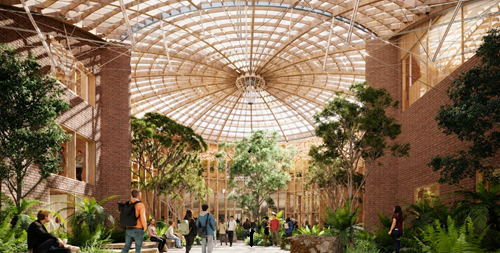
Held in the gorgeous Forest Building at University of Tasmania (UTAS), it was fantastic to hear from industry-leading professionals, researchers and fellow students across Australia and the globe, share what UDL means to them and the impactful work they are doing. To consolidate this, I co-facilitated a ‘Student World Café’ during lunchtime. Students and staff alike came together to brainstorm three key themes: our personal experiences of UDL, how it is currently used in a Teaching and Learning capacity, and breaking down the UDL 3.0 framework.
Key takeaways
UDL vs Non-UDL Spaces
Students are highly in tune with what works for them and what doesn’t. We discussed how we can quickly identify UDL-aligned learning spaces, and how we feel uncomfortable in spaces that aren’t. This discomfort comes from a feeling of being unsupported, and when we’re unsupported, we’re unable to effectively learn. We acknowledged that our UDL experience rapidly shifts between these different settings, and it can be stressful. As such, we want to bridge this gap by ensuring all spaces are UDL-aligned, prioritising faculties, offices and classrooms that don’t have UDL practices at all. Increasing UDL increases engagement, guaranteeing anyone is able to enter an environment with confidence and motivation.
We also discussed what UDL 3.0 looks like now, even going further by brainstorming what UDL 3.1 could look like! It was fantastic to hear from all the different ideas informed by each of our experiences, proving that UDL is a collaborative framework that should be informed by all perspectives.
Engagement, Intersectionality and Flexibility
UDL invites us to question established practices. Are there different ways students could engage with content? Could learning materials be presented in multiple formats? Are assessments measuring our understanding, or are unnecessary barriers obstructing our ability to demonstrate this understanding?
We discussed how assessment variability – be that anything from written essays to collaborative group projects, from tasks that measure ‘soft skills’ vs academic knowledge to exam weighting – is integral to inclusive education. When we focus on only one skill set or modus operandi of a student, we don’t accommodate for another.
Tackling disengagement by varied learning methods, regularly seeking and acting on feedback from students, and educating yourself are all key parts to ensuring greater engagement. We all learn and participate differently, and there’s no single solution to this variability. Multiple options available is better than only one available.
Learning Through Storytelling
Learning through collaboration and storytelling is essential to codesign – and codesign is key. When we design for a student, it only makes sense that we get feedback from that student to know what works for them! We agreed that this networking can happen in many formats – students chatting with fellow students, students with their educators, students with industry professionals, and so on.
It’s crucial that these opportunities aren’t siloed. We tell stories to learn from them, to identify the barriers in the system and act on them to create lasting changes. Most importantly, we have these conversations to identify things that we personally haven’t yet considered; one of the most exciting things I have experienced at symposiums like these is learning about new frameworks and ideas and passing them on!
Upskilling Educators
How can we encourage UDL when teachers are short on time, may not have come across UDL before, or may not deeply understand the systemic barriers in many current educational systems impacting students, including for students with disability and/or neurodivergence? These are the main challenges we identified when talking about UDL upskilling. One student even mentioned that although they learnt so much about UDL, they themselves weren’t sure where or who to go to hone their skills and educate others.
We agreed that it is imperative to promote UDL to educators and find ways to support their development and advocacy of UDL practices. Additionally, ‘closing the feedback loop’ by meaningfully engaging with students’ perspectives would be a great starting point in creating a culture of learning where feedback is welcomed and actively and continuously addressed.
Following on from the value of storytelling, we agreed that upskilling in inclusive education is a shared responsibility. The lived experience of students and the professional experience of educators inform one another and is grounded on respect. Specifically, respect for one’s perspective, acknowledging that although it may not be the same as yours, it deserves attention and action.
AI in UDL
We finally discussed AI’s role in the framework – if it helps or hinders our learning in a UDL context – and most of us agreed on AI as the ‘new assistive technology’. Although AI is ubiquitous and can help in many aspects of our learning, its ambiguity something to consider; specifically, how we need to have clearer guidelines of what AI usage looks like in academic integrity, while still being able to use it in a way that still makes learning accessible. Again, this topic is something that will benefit greatly from open dialogue between students and educators.
Calls to Action
From our discussions, there were three main calls to action:
- Pushing for funded UDL training opportunities for students and educators;
- Allowing students to ‘step into the space’ by amplifying their voice through ongoing, paid lived experience advisory roles. We need to shift the reliance on voluntary advocacy to professional recognition of the valuable insights students bring;
- And practising empathy and openly communicating with each other to create lasting and inclusive changes in the learning environment.
Our student group agreed that these UDL theories, frameworks and strategies will be all the easier to implement when we address the three main points.
It gives me so much pleasure to see events like these resonate, educate and inspire students and non-students alike. It reinforces the impact accessible and inclusive education can have and what it means for us students. Having events like ADCET’s UDL Symposium gives me a massive sense of hope and motivation to continue advocating for spaces where everyone can belong and thrive.
All the diverse, unique and invaluable experiences each student offers contributes to change. Change that has lasting impacts when creating inclusive learning environments. When we embed student voices – voices of all backgrounds, experiences and insights – into UDL conversations, we move closer to creating environments that are not only accessible, but genuinely responsive to those who learn within them. It’s not about designing students for systems; it’s about designing systems for students.
These insights at the Student World Café were developed within 30 minutes – imagine what would happen if these insights were ongoingly supported by institutions? The possibilities are endless, and that’s what makes UDL so exciting!
Author

Angie Tsimaras is a dedicated Biomedical Science Student at Deakin University; a NDIS Disability Support Worker; a Neurodiversity Mentor and member of Deakin University’s Access and Inclusion Student Advisory Board; and an Assistant in Qualitative Research Projects examining Disability and Neurodiversity Inclusion, and NDIS Lived Experience. A neurodiverse student themselves, Angie brings a wealth of knowledge in making spaces safe and accessible, facilitating open and inclusive discussions all the while. With experience in team leadership, partnering with organisations including Monash Health, FVREE, and the Deakin University Student Association (DUSA), they are a passionate advocate for those of all abilities and neurotypes, committed to empowering staff and students of all backgrounds to ensure successful and supportive environments.
Published: October 2026
Author
Angie Tsimaras