From Ideas to Impact: The pulse of the 2026 UDL Symposium
The conversations, connections and shared determination carrying UDL forward
The 2026 Australian Disability Clearinghouse on Education and Training (ADCET) Universal Design for Learning (UDL) Symposium brought together people from across the higher education and Vocational Education and Training (VET) sectors who care deeply about making education work better for every learner. Over 500 educators, students, disability practitioners, and learning designers joined sector leaders, policy makers and international guests in person in Hobart and online for three days of workshops, presentations and networking.
During the event we felt a real sense of warmth, curiosity and possibility. People were generous with their experience and honest about the challenges they face in their work. The team has now finished reviewing the post-event feedback, and we would like to share with you what we learned from attendees. Of the feedback received to date, 89% rated the Symposium excellent or very good, and 92% said they felt motivated to drive UDL uptake in their organisation. While this is a strong result, the broader feedback gives ADCET an opportunity to reflect on what worked, what didn’t and what people are asking for. We aim to use that evidence to shape future UDL Symposiums and our content.
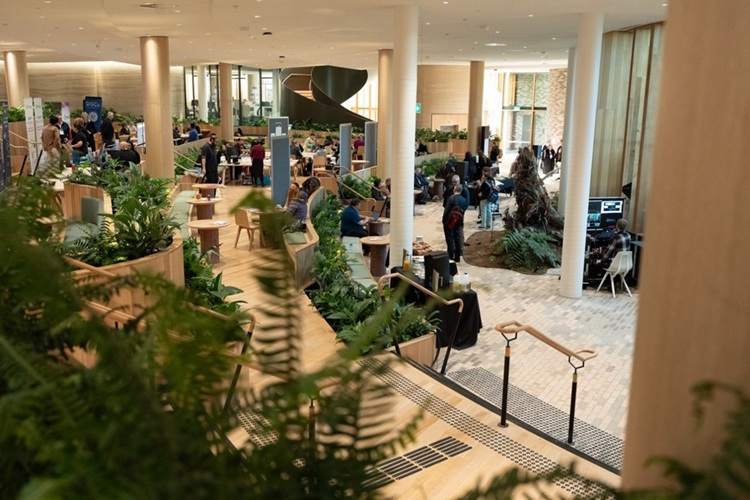
- an adaptable, flexible space (just the type we like!)
“I am feeling genuinely enthusiastic, motivated, and inspired. The symposium has encouraged me to think beyond the theory and start exploring practical ways we could implement UDL principles to create a more inclusive and engaging learning experience for our students.”
A welcoming space for bold ideas, safety and connection
Many described an energising, welcoming event where sessions and informal conversations created space for new ideas and connections. Inclusion was not only a topic on the program; it shaped the experience. Attendees valued the sensory and quiet rooms, social story, live captioning, visible volunteers, conversation mode stickers and the freedom to move, step out or participate in their own way. Together, these features helped create an environment where support was visible, normalised and available without people having to explain themselves.
We also know there are things we can improve next time. Whilst attendees valued the range of accessible participation options, places to pause and regulate, visible volunteers and the flexibility to take part online or in person, they also identified ways we could improve the experience. These included providing key information earlier, making schedules and links easier to navigate, improving wayfinding and applying accessibility measures consistently across sessions.
Most importantly, attendees told us they wanted to keep learning, connect with others and build momentum for UDL in their organisations afterward. They also wanted more practical, real-world presentations and resources showing how to implement UDL. There’s an evident demand for content that serves people at different stages, from those building foundational knowledge to experienced practitioners looking for more advanced applications.
Online access was an important part of the symposium, with almost two thirds of attendees joining us online. We spent a lot of time developing, planning and designing for the online experience with dedicated facilitators aimed at delivering consistent, inclusive experiences across multiple streams. Attendees repeatedly praised the online facilitation. A special thank you to Darren, Kylie, Kalli and Elizabeth for helping deliver this truly hybrid event. Feedback has suggested future improvements that could include accessible breakout conversations during workshops and shared networking spaces.
"It’s very rare that I find myself able to feel engaged online, but I learned so much and really enjoyed this. So I think the presenters did an amazing job and again, huge shout out to the facilitators for making sure everything was smooth and accessible and welcoming; I’m in awe of your work!!"
Ready to move from interest to action
We also took a thematic look at the attendee questions put to presenters during the Symposium via Slido, and this tells a powerful story. Across the program, participants wanted to understand how to make UDL work in a variety of settings. For example: assessment, large classes, wet labs, online learning, VET, student support and how to trigger institution-wide change.
Across the feedback and questions, the recurring asks from attendees could be broadly broken down into:
- What changed from implementing the project or idea?
- What got in the way?
- What did students experience?
- What evidence helped?
- How was (or is) the work sustained and scaled?
- How can we practically implement this?
- What lessons did you learn?
The themes from the questions asked gives ADCET critical insight into the types of content and webinars we can focus on in the next stage of our work supporting UDL adoption in Australia’s tertiary system, and also for next year’s UDL Symposium.
Celebrating people who are making change happen
The inaugural ADCET UDL Awards also gave us a great opportunity to recognise two people helping to turn that commitment into action:
- Kendal Sylvester from the University of Tasmania received the UDL Impact Award for work applying UDL and generative artificial intelligence to provide flexible, unit-specific student support.
- Kirsty Tod from RMIT University received the UDL Leadership Award for championing UDL and building educator capability across RMIT and the VET sector.
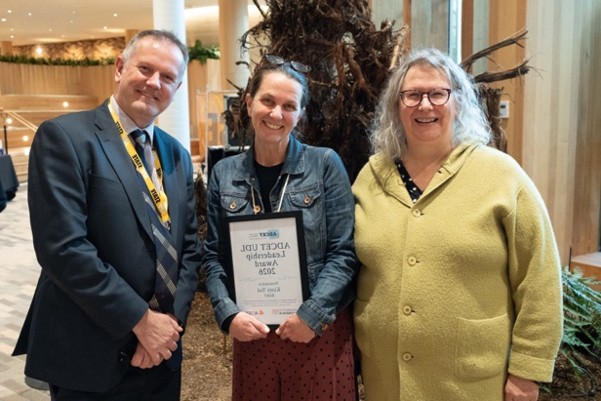
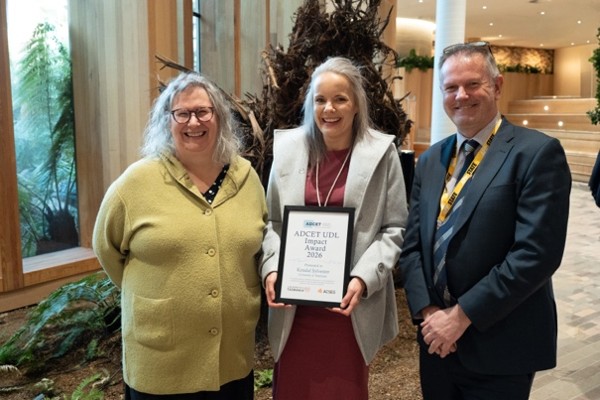
Their work reflects something we saw throughout the Symposium: change grows when people are willing to try, learn, share and bring others with them. The awards, sponsored by the Australian Centre for Student Equity and Success, celebrate that generous and practical leadership.
“Thank you as always. ADCET is our home base and always delivers amazing events.”
Next steps, and keeping connected
We do not want the ideas and connections from the Symposium to end or fade away after the event. ADCET is currently developing presentation content pages so people can return to the examples and resources shared and re-engage at their own pace. We will also use the questions and feedback discussed here to guide future updates to UDL content, with deep appreciation to everyone who took the time to share their thoughts.
Here are three ways you can stay connected now:
- Subscribe to ADCET updates for new UDL resources, event news and opportunities to contribute.
- Join the UDL Community of Practice, facilitated by TAFE SA in partnership with ADCET, to share practice and learn with colleagues every six weeks.
- Register to drop in to ADCET’s UDL Studio, a regular online space where you can bring a real challenge, strengthen a resource, hear different perspectives or simply listen.
The passion evident in Hobart and online gives us all plenty to build on. Thank you to everyone who presented, participated, asked a question, shared an idea or helped create such a welcoming space. Keep the conversation going by subscribing, joining the community and sharing what you are learning. Together, we can keep turning UDL into everyday practice. We hope to see you at the next Symposium.
“I feel like I have found my tribe of people who want to make the difference by embracing UDL. Very motivating.”
(July 2026)