ADCET Webinar: Neurodiversity Paradigm 101 - Lessons from the movement for higher education
Over recent years, Australian universities have rapidly adopted the language of neurodiversity. Websites proclaim institutions are "neurodiversity-affirming," policies reference "neurodiverse students," and staff complete training on "neurodivergent-friendly practices." But scratch beneath the surface and the actual support model remains largely unchanged: students still require diagnoses to access support, adjustments still treat individual deficits rather than systemic barriers, and crisis responses still prioritise risk management over student autonomy.
This webinar introduced the neurodiversity paradigm as articulated by Dr Nick Walker and Sonny Jane Wise as a reframing of how we understand human cognitive diversity in universities. It explored core principles including neuronormativity (the invisible standard that determines whose ways of being are valued), biocertification (requiring psychiatric authority to validate needs), and biopower (using diagnoses as tools of social control).
Through comparing the clinical/pathology paradigm with the neurodiversity paradigm, it examined what each produces in practice: from adjustments that treat symptoms rather than barriers, to Universal Design for Learning as baseline; from "reasonable adjustment" gatekeeping to support without diagnosis requirements; from risk management approaches to harm reduction and anti-carceral care.
This session challenged assumptions embedded in current university practice around academic integrity, crisis response, student support services, and learning design. It identified "paradigm-washing" - using liberation language whilst maintaining oppressive systems - and explored what genuine paradigm shift requires.
Participants left with conceptual tools for questioning systems, practical examples of neurodiversity-affirming approaches across different roles, and strategies for navigating the tension between paradigm ideals and institutional constraints. This was not a how-to guide or adjustment checklist - it was an invitation to examine the foundations of how we support neurodivergent students and ask whether we're ready to do more than change our language.
Expect discomfort. Expect critical reflection. Expect to question practices you thought were good. Paradigm shift work isn't comfortable: it's necessary.
This session assumed participants were committed to inclusive practice and were ready to critically examine the systems they work within. It's particularly relevant for those who feel tension between the neurodiversity language their institution uses and the actual outcomes students experience.
Not suitable for those seeking autism/ADHD awareness training, lists of adjustments, step-by-step implementation guides, or narrow definitions of who 'counts' as neurodivergent.
Q&A
These are questions that were asked during the presentation that were unable to be answered at the time.
What would you say to students and staff attempting to navigate perceived and/or actual stigma in the HE space and being an advocate without the access to formal diagnosis- which can feel more legitimate or recognised?
This is such a challenging experience, and I’ve been there. Self-diagnosis is valid for a whole range of reasons that many neurodivergent folks have written about ad nauseum: and to be explicit for everyone reading, having a formal diagnosis is not required to identify with the neurodivergent community. Neurodivergent is not a diagnostic label, it is a socio-political identity.
Disclosing without formal diagnosis and engaging in advocacy has its challenges, but it contributes to the cultural change work we want to see here: reducing reliance on and deference to formal diagnostic tools that are exclusionary and act to withhold support from people. However, as the question suggests, it’s not an easy path: being questioned and invalidated by others who lack neurodiversity-confidence is common here. It’s also not your job to educate people if this isn’t something you have the energy or passion to do.
My advice would be to spend time working on your own self-confidence and assurance in your neurodivergent identity, and to connect with peers. I have fewer specific suggestions for the advocacy techniques bit, as I think the support network and internal identity work is the part that will help make navigating this dynamic more sustainable and reduce the impact of ableist and neuronormative attacks you might face. Finding a neurodivergent community that can support you and understand your experience can act as a salve for when your experiences and identity are questioned. Engaging with neurodivergent cultures can be restorative and validating.
Lastly, reject gatekeeping by other neurodivergent people. If a space or an individual rejects you due to lack of formal diagnosis or because your neurotype doesn’t fit their expectations of who should be in our community, don’t persist here. They aren’t working from the neurodiversity paradigm, which is intended to be expansive and inclusive. They’re doing something else, which is their choice, but not something worth being part of. Find your people elsewhere – we’ve got you.
[For those sceptical when reading this question and answer, there are a few studies that suggest that false positives in self-identification are rare. Research is a bit limited to studies in autism, however we can potentially generalise here based on what we know about neurodivergence and co-occurring neurotypes]
Can you share some experiences and examples of where and how UDL and neuro-affirming practices are integrated in the workplace in WIL programs, for example.
Admittedly I haven’t seen too many practical examples, but I can offer a couple of suggestions! Coming from a principles-based approach, neuro-affirming WIL starts with questioning default, neuronormative assumptions: are there unspoken (or spoken!) rules in the working environment about professional communication and behaviour that reflect neuronormative ideas (e.g. does working in this space really require eye contact and small talk, or can it mean clear, direct written communication?). What about scheduling and time management – is it required, or just convenient and ‘traditional’ that students work at particular times in particular locations? Ultimately, the university is responsible for ensuring that this experience is accessible and inclusive – I see a lot of WIL and placement experiences where the university and the workplace both assume that the other one is going to do the work, and the student gets left with no support. Clear responsibilities and accountabilities are key.
Practical examples of UDL in WIL might include:
- Placement matching: Rather than assigning placements randomly, work with students to identify environments that align with their strengths and needs. Some students thrive in fast-paced, high-stimulus settings. Others need quiet, structured environments. Neither is better; they're different.
- Flexible attendance structures: Not all learning happens on-site during business hours. Remote options, varied schedules, or hybrid arrangements can maintain learning outcomes while accommodating different cognitive and sensory needs.
- Multiple forms of reflection and assessment: If we're genuinely committed to UDL, we don't require everyone to submit a 2000-word reflective essay. Offer alternatives: recorded reflections, structured interviews, portfolio work, presentations with notes. Assess the learning, not the format.
- Clear, explicit expectations: As mentioned, workplaces often operate on unwritten rules and implicit social codes that can seem confusing or illogical to neurodivergent people (they are often confusing and illogical full stop…). To address this, make expectations explicit. Provide written guidelines. Offer structured check-ins rather than assuming students will ask for help when needed.
- Supervisor training: WIL supervisors need to be disability-confident and understand neurodivergent experiences. They need strategies for providing feedback that's direct and clear rather than relying on hints and social cues. They need to recognise that a student who doesn't engage in office chat might still be engaged in their work.
- Proactive support planning: Rather than waiting for crisis, build in regular check-ins where students can flag what's working and what isn't. This normalises adaptation and removes the burden of constant self-advocacy.
Many workplaces are already implementing these practices without calling them "neuro-affirming." Remote work, flexible hours, written communication preferences – these became mainstream during COVID and many organisations discovered they work better for everyone.
Lastly, Dr Sandra-Thom Jones has published an awesome new book lately, Autism at Work. Highly recommend reading for a very comprehensive view on how to do work, and relatedly, WIL, inclusively and accessibly!
Even as an openly ND person, I fear that a world without diagnosis, or some form of "peer review", makes it harder for people to access supports when the reality is that supports cost resources and resources always finite. How do we reconcile supporting everyone and providing specialised support.
I think this bit is really challenging in our current environment when we frame support largely through an individual adjustments lens. Coming back to first principles, our goal here is to either eliminate or reduce barriers to equitable learning: that’s the purpose of the Disability Standards for Education and inclusive education in general. When we’re relying on access plans and individual adjustments as our first port of call to achieve this, we are always going to hit up against resourcing issues and budget constraints. They are expensive due to the staffing implications of their administration, as well as their lacking economies of scale.
We need to turn to UDL and universal design in general here: if we can get these principles embedded in what we are doing and how we work, and then revisit the remaining individual support needs, I think we would be in a much better place. We are never going to eliminate individualised support (and that should certainly not ever be the goal). However, we can divert resourcing to system level change and invest in universal supports to make an impact here.
At that point, where individual support needs remain (and they will), I do think that assessments of functional capacity and learning impact can be useful here: when administered in a neuro-affirming way, contextualised to the student’s learning goals. While I don’t support diagnosis or reports as the golden ticket to funding adjustments, I do actually find my diagnostic documentation a useful reference point to think about my strengths and support needs – unfortunately though, that’s not really how we are currently using them, and there are significant cost and access barriers to getting them in the forms we currently accept for these purposes. So, there may be a role here for some kind of assessment (designed from a strengths-based and neuro-affirming starting point) – it just needs to be fundamentally different from the way we are doing that now, and not be grounded in the “clinician knows best” approach. Because equally, not all students know what they need straight away: some kind of structure to navigate that question is really helpful for a lot of us.
So, overall, there may be a way to design a structured system of assessing need in a given learning context – strengths, and support needs – without having to lean on formal diagnosis (biocertification) or clinician-issued reports to access support at all (biopower). Principles here should be 1) working in partnership between student and support practitioner, 2) coming from a human rights model of disability, 3) taking a strengths-based approach, 4) considering the specifics of a student’s learning environment, and 5) rejecting deference to clinical reports. This helps us address barriers to student learning specifically and contextually when UDL and universal design principles are already in place.
I've heard that introductory ice breaker activities can be great or horrible. Would love tips on what to do / not do instead.
First, I am sure there are lots of neurotypical people who also find these both awesome and terrible. I think the icebreaker anxiety arises for people, regardless of neurotype, when they are seen as irrelevant to the context, unpredictable, unstructured, or vapid (neurotypical introverts, back me up here!). Where I have seen them work well, the following attributes are in place:
- People know what the icebreaker will be in advance, and that it will be happening. They can prepare their response.
- Skipping is normalised and role modelled. People can choose (or not) to participate.
- The topic is somewhat relevant to the context. This might be in relation to the subject of the class or meeting, or based on something people in the room have in common.
For what it’s worth, one of my favourites (I am a lover of well-designed and purposeful icebreakers, by the way) is “tell me something about your favourite hobby, passion, or special interest.” It gives people a chance to share something about what they like, and to talk about themselves in a way that offsets the personal aspects of questions like “tell us about yourself” or something inane like “if you were a fruit, what would you be”..
Presenter
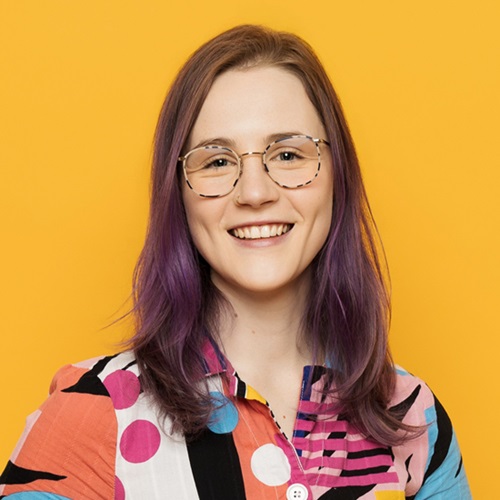
Ebe Ganon is a community engagement practitioner, researcher, and advocate living on Ngunnawal and Ngambri country (Canberra, ACT). Ebe uses her lived and professional expertise to promote accessibility in education, employment, and mainstream fitness settings. Her background spans the public and higher education sectors across a range of roles and project areas relating to inclusion and accessibility. Ebe is currently a PhD candidate at UNSW Canberra focused on disability employment and job satisfaction, working under Professor Helen Dickinson and Associate Professor Fiona Buick. Ebe is also the Board Chair of Children and Young People with Disability Australia, and holds a Master of Disability and Inclusion from Deakin University. Ebe was the winner of the 2024 National Awards for Disability Leadership Change Making Award, and an Emerging Young Leader delegate to the 18th Conference of State Parties on the Convention on the Rights of Persons with Disabilities (COSP18) at the United Nations in New York.
(November 2025)
ADCET is hosted by the University of Tasmania