
Bringing art into the OT classroom at JCU
What does art have to do with occupational therapy?
Quite a lot, as Annika Patmore, a lecturer at James Cook University (JCU), has discovered.
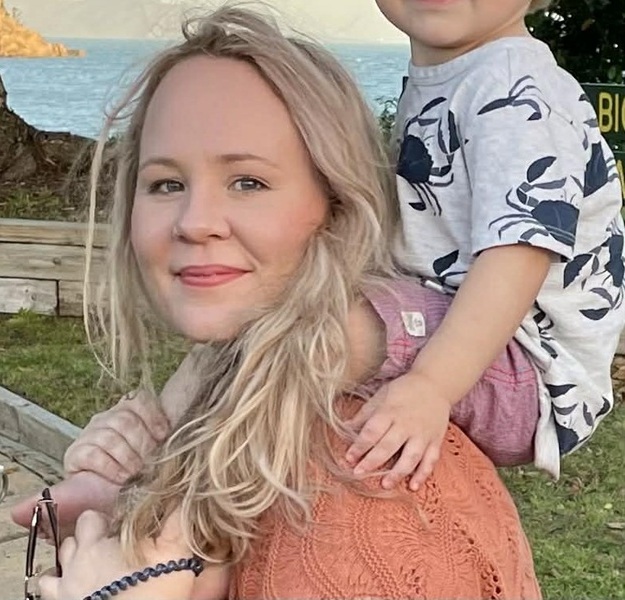
An occupational therapist by background, Annika spent many years working in different areas of clinical Occupational Therapy (OT) practice: neurological rehabilitation, mental health and hospital environments.
She credits this with giving her a broad skill set and a deep understanding of the communication needs of different population groups.
In some ways, lecturing at JCU is quite similar: she focuses on first year students, helping them make the transition to university which she notes can be difficult “for many reasons, different reasons for different people”.
“I really like being in the first year space to help students transition into uni life. I feel as though my background helps with supporting students and understanding [how] people have different needs,” Annika explained.
She believes students need to be supported to find out how they work best, so that they can achieve their best.
And it’s this belief that led her to create a new method of teaching fundamental OT concepts so that every student can pick them up.
Finding new ways to teach old concepts
In the first year of occupational therapy, Annika said, students need to learn a level of theoretical knowledge.
“We need to learn about OT theoretical models… [the] frameworks that we use to understand occupational therapy and how we might go about working with people,” she said.
“There are five that we teach, and it’s important to learn about them in first year because it builds knowledge from there. But I found that it’s very theory-heavy, lots of reading from the textbook. [Students were] struggling with the volume of reading and remembering.”
This didn’t sit well with the Annika, who remembered how she had struggled with the rote-style learning as a student herself. As someone who learns through doing, she began to wonder whether she could try a new approach to teaching the five models – something that might appeal more to students who learned in different ways.
With a love of “art and expression and vibrance”, Annika decided to tap into that and see if it resonated. She hoped it would result in a tactile experience for students that would help them come to grips with new terminology and models.
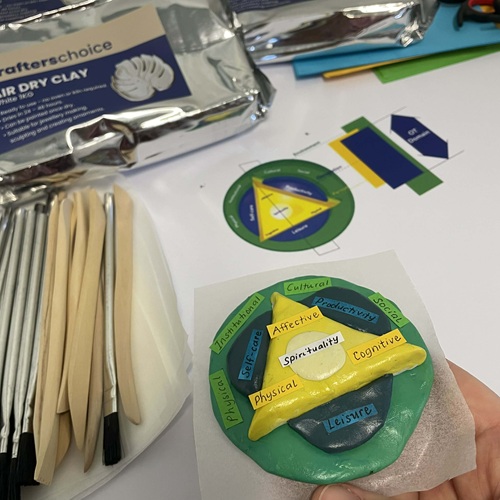
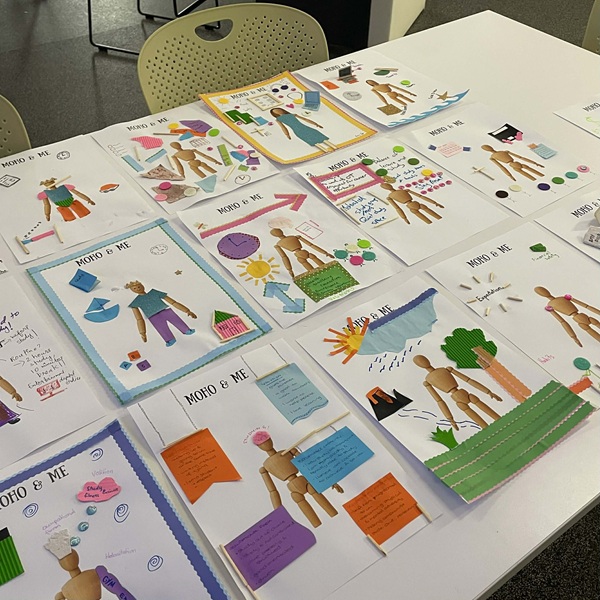
For four weeks, students trialled a series of art projects in her teaching, using a different art medium each week to explore a different theoretical model. The approach meant that students could shape the materials in ways that would best help them remember concepts.
Annika said she aimed to choose mediums that would align with each model; one week, students used clay to make a 3D representation of a diagram in a textbook. In another, she used edible art to illustrate the strengths and barriers of patients.
“That was all fun because they got to eat it along the way!” she laughed.
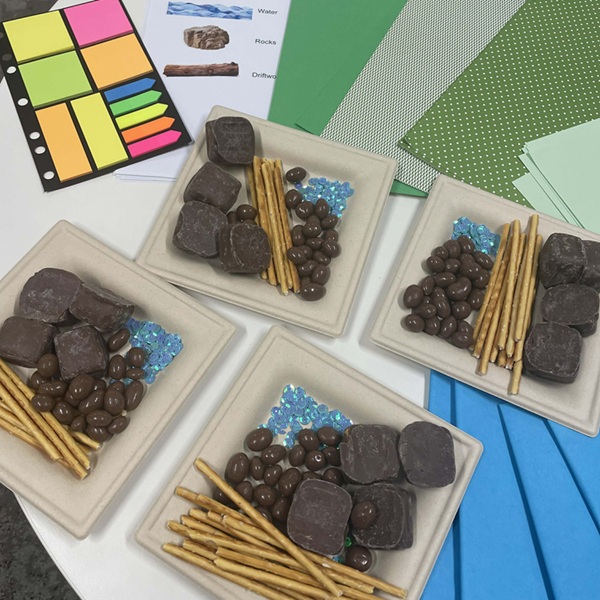
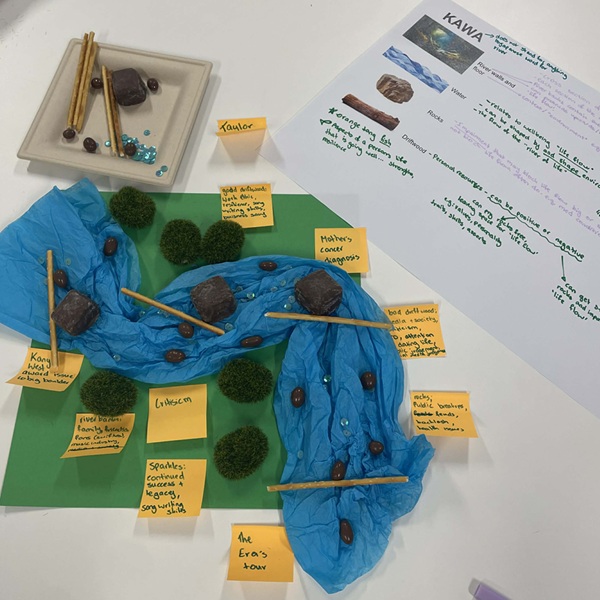
Besides the food components, she noticed that students were enjoying this new method of learning.
“I noticed the [difference] in the level of conversation in the room. It was a lot of sharing and connection. It was lovely to see.”
A different way to communicate
For Annika, a big part of the art series activity has been recognising that people have different communication needs and processes – something she hopes her students will remember and draw upon when they enter their chosen profession.
“If we’re working as OTs trying to educate our clients on something, we need to be mindful of how that information is going to be received. It’s pointless talking through our advice and recommendations to a patient, for example, if that’s not how they’re going to receive the information,” she said.
“It’s really important as a health professional to understand health literacy. If [the patient is] not somebody that might understand a lot of verbal input… we need to be delivering that health education through different avenues, like… pictures or something creative.”
She could see the approach being used in other subjects too, like anatomy and physiology.
Annika describes herself as a sensory-seeking person, meaning art is the perfect medium for her to learn through. She believes it could work well for students with disability, especially those who, like Annika, have sensory-seeking preferences or communication differences.
She has worked with students with dyslexia who have learned better through hands-on activities rather than rote reading blocks of text.
“There are so many students…that struggle with the traditional approaches that we have. I think that we all, as academics, have the responsibility to be flexible and check in with ourselves, even if [a practice] has been done for years and years. We should think about how we’re teaching everything regularly to see if it’s still relevant or supportive or diverse enough,” Annika said.
But she stressed that implementing any new pedagogy needs to take into account each individual student’s preferences and needs.
“There are students there that might be sensory adverse. [The art series is] not for everybody… it gets pretty messy.”
Still, she said teachers and practitioners shouldn’t be afraid to give something new a try, to see whether it works for their students.
“Choosing one thing to do differently… is really important. If it’s not art, [it could be] getting out of the chair to move around the room, or something hands on.”
She’ll spend this year refining the art series to find new mediums for students to learn and enhance the sensory aspects of her classroom environment. She’s planning on bringing in sensory toys and weighted blankets and encouraging her students to think about universal design for learning and how that can be applied to what they do.
For Annika, the lesson is clear: “tactile learning is another very valid and important way of learning.”
Written by: Danielle Kutchel
(February 2026)